The Invisible Shield: Why TiO2 Surface Treatment Determines Everything
 Joe•
Joe•
Without surface treatment, Titanium Dioxide is essentially unusable in industrial applications. Think of raw TiO2 as a “hyperactive troublemaker”—highly reactive to UV light and difficult to mix. The difference between a generic commodity grade and a high-performance pigment from top-tier manufacturers lies entirely in the “Coating”—the microscopic armor that dictates weatherability, dispersion, and oil absorption. This guide breaks down the difference between Inorganic and Organic treatments and how to read a chemical datasheet to find the perfect grade for your specific application.
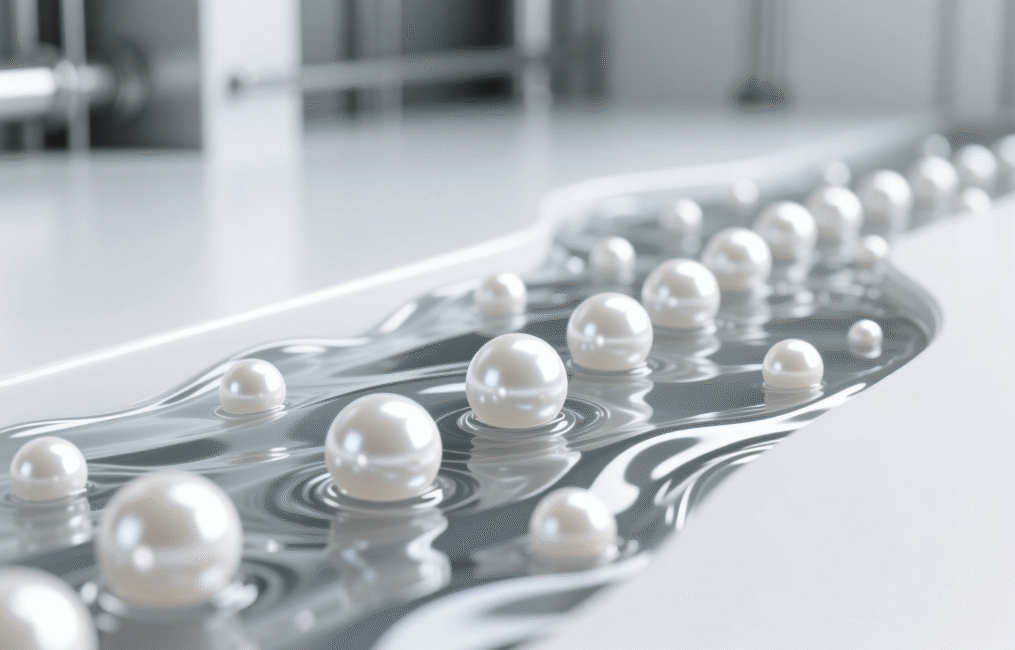
If you look at a datasheet for Titanium Dioxide, you aren’t just looking at a white powder; you are looking at a feat of chemical engineering. Here is a fundamental truth of the industry: Without surface treatment (coating), TiO2 is almost unusable for most industrial applications.
While the manufacturing process (Chloride vs. Sulfate) determines the crystal purity, the Surface Treatment determines the grade, the price, and the application.
To understand why, we must first look at the nature of the TiO2 particle itself.
The “Hyperactive Troublemaker”
Imagine a raw TiO2 particle as a “hyperactive troublemaker.”
- It is Photocatalytic: When exposed to sunlight, raw TiO2 generates free radicals. If left unchecked, these radicals will attack and destroy the resin around them, causing paint to chalk and plastic to crack.
- It is Hydrophilic: It loves water and hates oil. If you try to mix raw TiO2 into oil-based paints or plastics without treatment, it won’t disperse; it will clump together into useless agglomerates.
The goal of surface treatment is to put a “Protective Suit” on this troublemaker. This suit has two layers: an Inorganic Inner Layer (“The Armor”) and an Organic Outer Layer (“The Lubricant”).
1. Inorganic Treatment: The Armor
The Primary Layer: Determines Weatherability & Spacing
This process involves precipitating metal oxides onto the pigment surface. It creates a physical barrier—a ceramic-like shell.
- The Materials: Aluminum (Al₂O₃), Silicon (SiO₂), and Zirconium (ZrO₂).
- The Function:
- Blocking UV Activity: This layer acts like a heavy-duty sunscreen. It blocks the free radicals, preventing the TiO2 from destroying the paint film. This is the key to Weather Resistance.
- Physical Spacing: It forces a physical distance between particles, preventing them from crowding. Better spacing equals better light scattering, which means higher Opacity (Hiding Power).
The Material Matters:
- Aluminum (Al): The standard for dispersion and gloss. Almost all grades have this.
- Silicon (Si): The king of durability. High-Silicon grades are required for exterior paints, though a very thick Si layer can reduce gloss.
- Zirconium (Zr): The balanced choice. It offers good hardness and gloss retention, often used in inks.
2. Organic Treatment: The Lubricant
The Secondary Layer: Determines Dispersion & Compatibility
Even with the “Armor” on, the particle is still rough and hydrophilic. To make it mix perfectly into plastic or paint, we need an organic coating.
- The Materials: Polyols (TMP, TME), Silanes, Amines, and Organic Silicon.
- The Function:
- Lubrication: It reduces friction between particles, allowing them to flow freely during grinding or extrusion.
- The Bridge: It acts as a coupling agent. One end of the molecule grabs the TiO2, and the other grabs your resin, forcing them to become compatible.
- Waterproofing: It changes the surface from hydrophilic (water-loving) to hydrophobic (oil-loving), which is critical for plastics and masterbatches.
3. How Treatment Impacts Technical Specs
When manufacturers treat TiO2, they are balancing trade-offs. Here is how coating affects the “Big 5” metrics:
- Dispersion: Big Improvement. Both layers help break down agglomerates, ensuring a smooth finish without “pinholes.”
- Weatherability: Decisive Factor. A dense Silica skin is the only thing standing between your exterior wall paint and UV degradation.
- Oil Absorption:The Trade-off.
- Inorganic treatment increases surface area (making the particle rougher), which raises oil absorption.
- Organic treatment fills those pores and lubricates the surface, which lowers oil absorption.
- Note: Plastic-specific grades (like BLR-886) use heavy organic treatment to keep oil absorption low, ensuring the melt flow remains fluid.
- Opacity: Improvement. By keeping particles separated, light refracts more efficiently.
- Gloss: Variable. Dense Al/Zr coatings create high gloss. Heavy, dense Silica coatings (for extreme durability) can naturally lower the gloss level locally.
The Procurement Cheat Sheet: Decoding the TDS
When sourcing from brands like LB Group, CNNC, or others, look at the surface treatment composition to discover the grade’s true purpose:
- Treatment: Al (Aluminum Only)
- Verdict: The Universal Grade. Good dispersion, high gloss.
- Use: Interior coatings, general plastics.
- Treatment: Zr / Al (Zirconium + Aluminum)
- Verdict: The “Shiny & Tough” Grade.
- Use: Industrial coatings, Inks.
- Treatment: High-Si / Al (Dense Silica + Aluminum)
- Verdict: The “Super Durable” Grade. Usually higher oil absorption.
- Use: Automotive OEM paint, high-end exterior architectural paint.
- Treatment: Special Hydrophobic Organics
- Verdict: The “Low Viscosity” Grade.
- Use: Masterbatches and thin-film plastics.
Conclusion Surface treatment is the manufacturer’s “Secret Recipe.” It is why premium grades command a higher price than commodity grades. They don’t just sell you Titanium Dioxide; they sell you a carefully engineered particle designed to withstand the elements and disperse effortlessly into your product.