The Engineering Science of PAC in Water-Based Drilling Muds: Advanced Fluid Loss Control
 Joe•
Joe•
Master wellbore stability with PAC. Learn how Polyanionic Cellulose optimizes filter cake quality and prevents differential sticking. Inquire for bulk high-performance PAC.
In the demanding environment of oil and gas exploration, the integrity of the wellbore is dictated by the rheological precision of the drilling fluid. Polyanionic Cellulose (PAC), a chemically modified cellulose ether, stands as the industry standard for high-performance fluid loss control in water-based muds (WBM).
Unlike standard carboxymethyl cellulose (CMC), PAC features a higher degree of substitution (DS) and a more uniform molecular distribution. This macromolecular structure allows it to function effectively across varying salinity gradients—from freshwater to saturated brine—making it indispensable for preventing fluid invasion into sensitive formations.
Chemical Mechanism: The “Waterproof Jacket” & Filter Cake Dynamics
The primary objective of PAC in a drilling system is the reduction of API Filtrate Loss. This is achieved through three synergistic chemical mechanisms:
The Adsorption & Encapsulation Strategy
PAC molecules carry a high density of anionic carboxylate groups. Through electrostatic attraction and hydrogen bonding, these polymers adsorb onto the surface of clay particles (bentonite) within the mud. By “wrapping” these particles, PAC acts as a protective colloid, preventing the hydration and subsequent swelling of reactive shales—a primary cause of wellbore collapse.
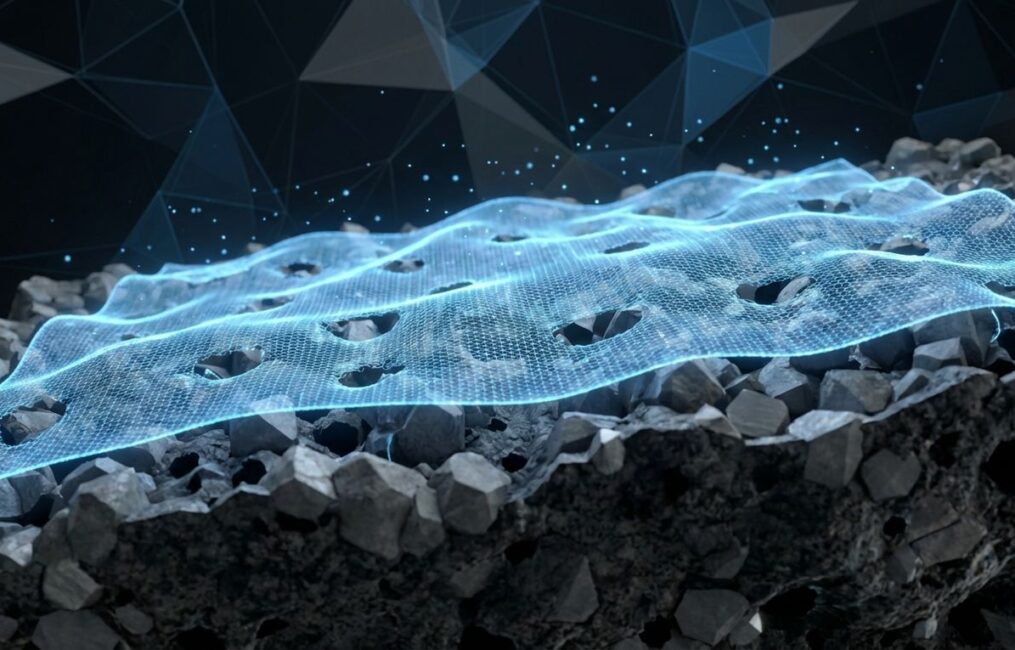
Formation of the “Tough” Filter Cake
In the absence of high-quality PAC, drilling fluids create a “mushy,” thick filter cake on the borehole wall. This leads to differential sticking, where the drill pipe becomes embedded in the soft cake due to pressure imbalances.
- PAC Mechanism: PAC fills the interstitial voids between clay platelets in the filter cake.
- The Result: It transforms the cake into a thin, low-permeability, and remarkably tough “waterproof jacket.” This membrane effectively seals the formation, keeping the filtrate (liquid phase) within the wellbore and maintaining hydrostatic pressure.
Viscosification and Thixotropic Control
PAC-HV (High Viscosity) increases the carrying capacity of the mud by modifying its thixotropic properties. It ensures that drill cuttings are suspended during circulation breaks, preventing accumulation at the bit.
📊 LV or HV: Which one controls loss better?
Choosing the right viscosity grade is critical for fluid loss efficiency. Compare the technical differences here.
Compare PAC LV vs HV →PAC Grade Comparison & Specifications
Choosing the correct PAC grade depends on the specific rheological requirements of the strata.
| Property | PAC-HV (High Viscosity) | PAC-LV (Low Viscosity) |
| Primary Function | Viscosification & Filtration Control | Filtration Control (Minimal Viscosity Impact) |
| Molecular Weight | High | Medium to Low |
| Degree of Substitution (DS) | ≥0.90 | ≥ 0.90 |
| Application | Low-solids muds; boosting carrying capacity | High-density muds; weighted systems |
| Typical Concentration | 0.5 – 2.0 ppb | 1.0 – 3.0 ppb |
Performance Optimization in HPHT Environments
In High-Pressure High-Temperature (HPHT) wells, the thermal stability of the polymer is critical. As temperatures rise, the kinetic energy of the polymer chains increases, potentially leading to the cleavage of the Β-1,4-glycosidic bonds in the cellulose backbone.
To optimize performance in these conditions:
- Synergistic Blends: Combine PAC with sulfonated resins or starches to extend the thermal ceiling.
- Salinity Management: In saturated salt muds, ensure the use of high-DS PAC to maintain solubility and prevent “salting out” of the polymer.
- PH Regulation: Maintain mud pH between 9.0 and 10.0 to ensure maximum ionization of the carboxylate groups, optimizing the polymer’s “uncoiled” state for better film formation.
Addressing Industrial Pain Points: Why Wellbores Fail
- Clay Swelling: Without PAC, water penetrates shale layers, causing them to expand into the wellbore (sloughing). PAC’s encapsulation prevents this hydration.
- Differential Sticking: A thick, permeable filter cake creates a vacuum effect. PAC’s ability to create a thin, slick cake reduces the coefficient of friction, allowing for smoother pipe movement.
- Reservoir Damage: Excessive filtrate invasion can damage the producing formation (skin effect). PAC minimizes this invasion, protecting the long-term productivity of the reservoir.
Frequently Asked Questions (FAQ)
Q: How does PAC-LV differ from CMC-LV?
A: While both are cellulose derivatives, PAC has a higher degree of substitution and a more uniform distribution of substituent groups. This makes PAC significantly more resistant to salt contamination and thermal degradation than standard CMC.
Q: Can PAC be used in salt-saturated drilling fluids?
A: Yes. High-quality PAC is designed to be salt-tolerant. The anionic charges remain active even in high Cl- environments, though higher concentrations may be required compared to freshwater systems.
Q: What is the impact of PAC on the “yield point” of the mud?
A: PAC-HV will significantly increase the yield point and plastic viscosity, aiding in cutting transport. PAC-LV is specifically engineered to control fluid loss while keeping the plastic viscosity low, which is vital for high-density, weighted muds.
For technical procurement and bulk inquiries regarding high-purity Polyanionic Cellulose (PAC-HV/LV), contact the Raw Chemical Mart engineering team for a customized formulation analysis.