Industrial Polyvinyl Alcohol (PVA) Supplier & Manufacturer
 Joe•
Joe•
What is Polyvinyl Alcohol (PVA)? Polyvinyl Alcohol (PVA) is a water-soluble synthetic polymer that has become indispensable in modern industrial manufacturing. Unlike many polymers created through direct polymerization of monomers, PVA is manufactured via the hydrolysis (saponification) of polyvinyl acetate (PVAc). This unique chemical origin gives PVA its distinctive backbone structure, characterized by alternating hydroxyl
What is Polyvinyl Alcohol (PVA)?
Поливиниловый спирт (ПВС) is a water-soluble synthetic polymer that has become indispensable in modern industrial manufacturing. Unlike many polymers created through direct polymerization of monomers, PVA is manufactured via the hydrolysis (saponification) of polyvinyl acetate (PVAc). This unique chemical origin gives PVA its distinctive backbone structure, characterized by alternating hydroxyl groups that facilitate strong hydrogen bonding.
For procurement officers and chemical engineers, PVA represents a versatile functional ingredient known for its exceptional film-forming properties, high tensile strength, and resistance to oils, greases, and solvents. It is biodegradable and non-toxic, making it a preferred choice in environmentally sensitive applications ranging from food packaging to water treatment.
At rawchemicalmart.com, we supply high-purity PVA grades that serve as the fundamental building blocks for adhesives, construction materials, and textile processing aids, ensuring global supply chain stability for high-volume manufacturers.
Understanding PVA Grades and Specifications
Selecting the correct Polyvinyl Alcohol grade is not a “one-size-fits-all” process. The performance of PVA in any formulation is dictated by two critical technical parameters: Degree of Hydrolysis (Saponification) and Молекулярный вес (Viscosity).
- Degree of Hydrolysis: This indicates the percentage of acetate groups that have been converted to hydroxyl groups. It determines water sensitivity. Fully hydrolyzed grades (98%+) offer high water resistance and tensile strength, while partially hydrolyzed grades (87-89%) provide excellent water solubility and surface activity.
- Viscosity (Molecular Weight): This correlates with the degree of polymerization. Higher viscosity grades provide stronger adhesion and thickening power but may be harder to dissolve, whereas lower viscosity grades offer better flow properties and higher solids content in formulations.
For a deep dive into selecting the right grade, read our PVA Grades & Specifications Guide: Molecular Weight & Hydrolysis.
Comparative Specifications of Common PVA Grades
To assist R&D teams in grade selection, the table below outlines standard specifications available through Raw Chemical Mart:
| Grade Type | Hydrolysis (mol %) | Viscosity (mPa.s) | Key Characteristics | Typical Application |
|---|---|---|---|---|
| Partially Hydrolyzed (e.g., 17-88) | 87.0 – 89.0% | 20 – 50 (Low-Med) | Cold water soluble, high surface activity. | Adhesives, Emulsion Polymerization |
| Fully Hydrolyzed (e.g., 17-99) | 98.0 – 99.0% | 25 – 35 (Medium) | Hot water soluble, high tensile strength, water resistance. | Textile Sizing, Paper Coatings |
| Super Hydrolyzed | > 99.5% | Variable | Maximum water resistance and film strength. | Ceramics, Specialty Films |
Procurement Tip: When sourcing PVA, consistency in the “Ash Content” and “Volatiles” is just as important as hydrolysis. High ash content can lead to clarity issues in clear films or adhesives. Raw Chemical Mart ensures strict COA compliance to minimize batch-to-batch variation.
Beyond standard grades, specialized applications may require chemical modification. Learn about modifying PVA properties in our Crosslinked Polyvinyl Alcohol (PVA) & Modification Technical Guide.
Key Industrial Applications of PVA
Adhesives and Glues
PVA is the backbone of the adhesive industry, most famously known as the primary ingredient in white wood glue and paper adhesives. Its ability to form a strong, transparent bond with cellulosic materials makes it the standard for furniture manufacturing and bookbinding. In these applications, partially hydrolyzed PVA is often preferred for its tackiness and re-wettability.
Explore manufacturing protocols in our Polyvinyl Alcohol (PVA) Adhesive Manufacturing Process & Formulation Guide.
Construction and Building Materials
In the construction sector, PVA acts as a vital additive in cementitious mixtures, mortars, and dry-mix putties. It enhances the bond strength between old and new concrete, improves workability, and reduces water loss during the curing process. While Redispersible Polymer Powders (RDP) are often used, liquid PVA solutions remain a cost-effective bonding agent for surface preparation.
See how PVA improves building materials in our PVA in Construction: The Ultimate Guide to Cement Coatings & Bonding Agents.
Paper Manufacturing
The paper industry utilizes PVA for both surface sizing and pigment coating. PVA forms a tough, clear film on the paper surface that improves printability, oil resistance, and solvent holdout. It is also a critical carrier for Optical Brightening Agents (OBAs), ensuring that high-quality paper achieves the desired whiteness and brightness levels.
Discover details in our Polyvinyl Alcohol (PVA) in Papermaking: Coatings & Binders.
Textile Warp Sizing
PVA is extensively used in textile manufacturing to size warp yarns. The polymer creates a protective coating around the yarn, preventing breakage during the high-speed weaving process. Its advantage over starch lies in its superior film strength and the ease with which it can be desized (washed off) using hot water before the fabric is dyed.
Read more in our PVA in Textiles: Ultimate Guide to Warp Sizing & Vinylon.
Emulsion Polymerization
In the production of polymer emulsions, such as Vinyl Acetate Ethylene (VAE) or PVAc latices, PVA serves as a protective colloid. It stabilizes the emulsion droplets, preventing coagulation and ensuring mechanical stability during storage and application. The selection of the specific PVA grade directly influences the viscosity and particle size distribution of the final emulsion.
Learn formulation techniques in our PVA Emulsion Formulation Guide: Stabilization & Paint Applications.
Safety, Handling, and Environmental Impact
One of the primary reasons for the global adoption of Polyvinyl Alcohol is its safety profile. PVA is generally recognized as non-toxic and is approved for use in food contact packaging (subject to specific FDA regulations). Environmentally, it is biodegradable; microorganisms found in water treatment plants can break down the polymer chains, reducing its long-term ecological footprint.
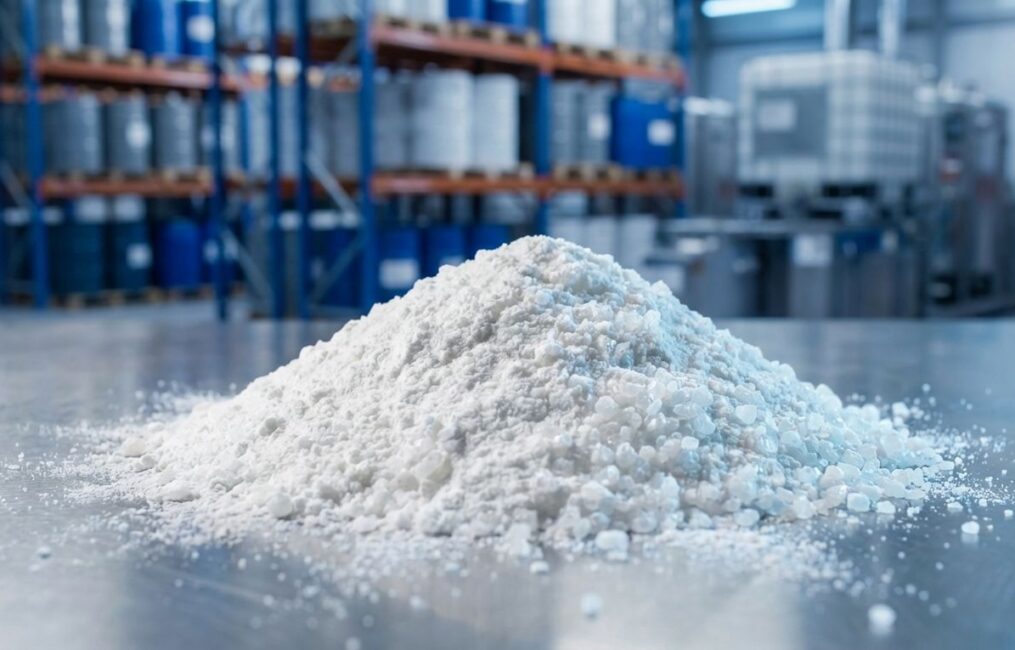
Handling Advice: While PVA is non-toxic, it is supplied as a fine powder or granule. Proper ventilation is required to prevent dust accumulation, which can pose a respiratory nuisance or a combustible dust hazard in confined spaces. Always store in cool, dry conditions to prevent caking due to moisture absorption.
Access full safety protocols in our Polyvinyl Alcohol (PVA) Safety Data Sheet (SDS): Toxicity & Handling.
Conclusion and Future Trends
Polyvinyl Alcohol remains a critical material in the global chemical supply chain, bridging the gap between high-performance engineering and environmental sustainability. As industries move toward greener solutions, the demand for biodegradable barrier films and water-soluble packaging is driving innovation in PVA formulations.
For B2B buyers, the challenge lies not just in selecting the right grade, but in securing a reliable partner who can guarantee specification accuracy and logistics efficiency. rawchemicalmart.com stands ready to support your production needs with a comprehensive portfolio of PVA grades, tailored to meet the rigorous demands of construction, textiles, and adhesive manufacturing.