The Ultimate Guide to Polyanionic Cellulose (PAC): The Engineered Backbone of Industrial Fluid Systems
 Joe•
Joe•
Master Polyanionic Cellulose (PAC) chemistry, API 13A specs, and industrial applications. Learn how PAC HV/LV optimizes drilling fluid performance. Inquire for bulk.
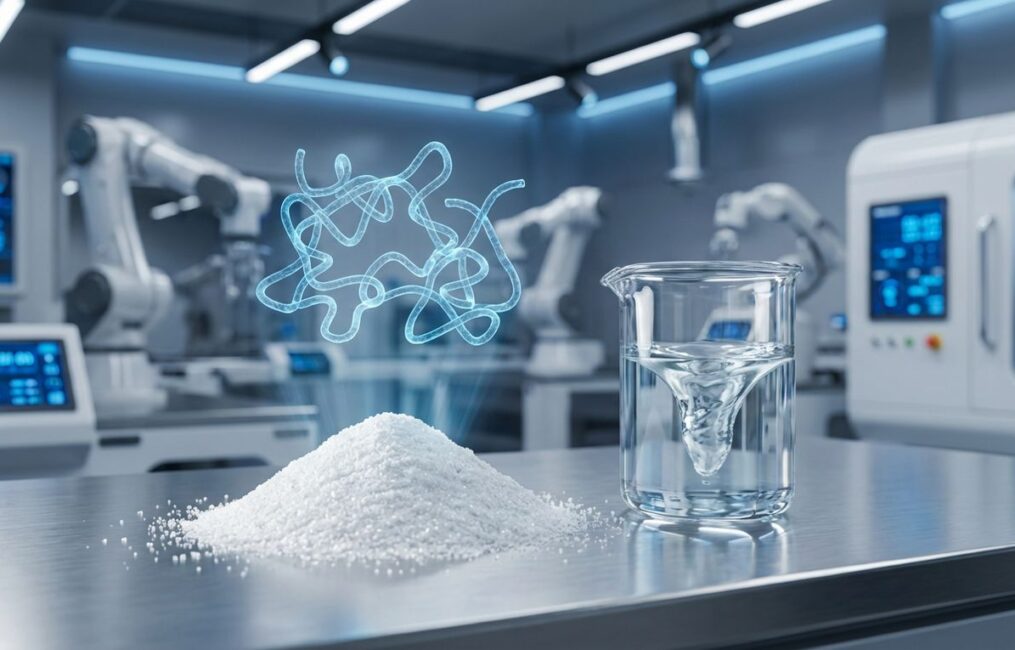
Polyanionic Cellulose (PAC) represents the pinnacle of cellulose ether technology. As a high-purity, water-soluble polymer derived from natural cellulose through chemical modification, it has become an indispensable additive in modern industrial engineering—most notably in oil and gas exploration, mineral processing, and construction.
While often compared to Carboxymethyl Cellulose (CMC), PAC offers superior thermal stability, salt resistance, and fluid-loss control. This guide synthesizes the chemical architecture, manufacturing logic, and performance dynamics of PAC to serve as the definitive resource for R&D engineers and procurement specialists.
1. Chemical Architecture and Synthesis
The performance of PAC is dictated by its macromolecular structure. It is an anionic cellulose ether where the hydroxyl groups on the glucose units of the cellulose chain are substituted by carboxyl groups (-CH2COONa).
The Manufacturing Process
The synthesis of PAC is a precision-controlled etherification reaction. Unlike standard grade CMC, PAC requires a higher Degree of Substitution (DS)—typically >0.90—to ensure maximum stability in harsh environments.
- Alkalization: Raw cellulose is treated with sodium hydroxide (NaOH) to activate the glucose rings.
- Etherification: The alkali cellulose reacts with Monochloroacetic Acid (MCA) under strictly controlled temperatures.
- Purification: To achieve “Polyanionic” status, the byproduct salts are washed away, resulting in a high-purity polymer that maintains performance under high-salinity conditions.
Deep Dive: For a step-by-step breakdown of the chemical reactions and refining stages, explore ourPAC Manufacturing Process & Chemical Synthesis Guide.
2. Technical Specifications & API Standards
In the B2B sector, PAC is categorized primarily by its impact on the rheology of the carrier fluid. The industry standard is governed by API Spec 13A, which defines the requirements for PAC in drilling applications.
Technical Specification Table: PAC-HV vs. PAC-LV
| Parameter | PAC-HV (High Viscosity) | PAC-LV (Low Viscosity) |
| Primary Function | Viscosifying & Fluid Loss Control | Filtration Control (Minimal Viscosity Change) |
| Apparent Viscosity | ≥ 50 mPas | ≤ 40 mPas |
| Filtrate Volume | ≤ 15 mL | ≤15 mL |
| Degree of Substitution | ≥0.90 | ≥ 0.90 |
| Moisture Content | ≤10% | ≤10 % |
Understanding these benchmarks is critical for project compliance. For detailed testing protocols and compliance checklists, refer to our Technical Guide to API 13A PAC-LV Specifications.
3. PAC vs. CMC: The Engineering Distinction
A common misconception in chemical procurement is that PAC and CMC are interchangeable. While both are cellulose-derived, PAC is engineered for “extreme” environments.
- Salt Tolerance: PAC maintains its molecular chain integrity in saturated brine solutions, whereas standard CMC may undergo polymer coil collapse.
- Temperature Stability: PAC exhibits a higher glass transition temperature (Tg) and thermal degradation threshold, making it suitable for deep-well drilling.
For a comprehensive rheological comparison and cost-benefit analysis between these two polymers, see our PAC vs. CMC: Drilling Fluid Engineering Comparison.
4. Industrial Applications & Performance Mechanics
PAC’s primary role is the stabilization of aqueous suspensions. Its performance is rooted in its ability to form a thin, tough, and low-permeability “filter cake.”
Fluid Loss Control (Filtration Reducers)
In drilling muds, PAC molecules adsorb onto clay particles, creating a thixotropic network that prevents the liquid phase of the mud from leaking into the porous rock formation. This prevents wellbore collapse and protects the formation from damage.
Scientific Insight: Learn more about theScience of Fluid Loss Control in Drilling Mudsand how molecular weight distribution affects filter cake thickness.
Rheology Modification
- PAC-HV: Used when the fluid requires a “lift” in carrying capacity to transport drill cuttings to the surface.
- PAC-LV: Used in high-density fluids where filtration control is needed without increasing the plastic viscosity to unmanageable levels.
To determine which grade suits your specific geological profile, consult our Selection Guide: PAC-LV vs. PAC-HV Dynamics.
5. Performance Optimization & Troubleshooting
To maximize the efficiency of Polyanionic Cellulose in industrial settings, engineers must account for:
- Shear Rate: PAC displays pseudoplastic behavior; its viscosity decreases under shear, facilitating easier pumping.
- pH Sensitivity: Optimal performance is typically found in the pH range of 7.0 to 11.0.
- Cross-linking Density: In specialized applications, PAC can be cross-linked with polyvalent metal ions to form high-strength gels.
6. Conclusion
Polyanionic Cellulose is more than a thickener; it is a high-performance chemical tool designed for precision fluid management. By selecting the correct grade (HV vs. LV) and ensuring adherence to API 13A standards, industrial operators can significantly reduce downtime and chemical waste.
Looking for High-Purity PAC for your next project?
Contact Raw Chemical Mart for technical data sheets (TDS), safety data sheets (SDS), and bulk wholesale pricing for API-grade PAC.