Epoxy Hardener Selection: Complete Performance Indicator Guide
 Joe•
Joe•
How to evaluate an epoxy hardener: the handling, mechanical, thermal and chemical indicators that matter, with seven hardener types compared side by side.
Pick the wrong hardener, and your coating fails in months. Pick the right one, and it lasts for years. The difference comes down to which performance indicators you check before you commit.
Most buyers focus on two or three properties — cure speed, cost, maybe chemical resistance. A hardener decision actually turns on more than twenty, and they divide into two groups: the ones you can measure while the material is still liquid, and the ones you can only measure after it has cured.
This guide works through both groups, then compares the seven main hardener types across them.
Indicators You Check Before the Cure
These describe how the hardener behaves in the drum, in the mixer, and on the substrate.
Physical state and melting point
Some hardeners are liquid at room temperature. Others are solid and must be melted before use — DDM, for example, melts at 89°C, so you need an oven or a heated mixing vessel just to get started.
Liquid hardeners are simpler. You pour, mix, and apply. No heating step means faster production and lower energy cost.
Viscosità
Viscosity measures how thick or thin the hardener flows. Below about 500 mPa·s, mixing is easy and the system wets the substrate well. Above 10,000 mPa·s, you need mechanical mixing and may need to thin the system.
Viscosity also governs how well the hardener penetrates fibre bundles in composite work and how evenly it spreads across a substrate in coating work.
Compatibility and miscibility
The hardener has to mix evenly with the resin. Poor compatibility produces phase separation, cloudy films, and inconsistent cure. Modified hardeners generally have better compatibility than the unmodified bases they are built from.
Cure temperature and reactivity
Some hardeners cure at room temperature. Others need heat, sometimes up to 200°C. This decides what equipment you need and how you schedule production.
Reactivity determines how fast the hardener reacts with the epoxy. High reactivity means fast cure and short pot life. Low reactivity means long working time and slower throughput.
Pot life and gel time
Pot life is the window you have to mix and apply before the material starts to thicken. Gel time is the point at which it turns from liquid to gel.
Short pot life (10–30 minutes) suits fast production, but you mix only what you can use immediately. Long pot life (2–8 hours) gives you room to work at the cost of slower cycles.
Exothermal heat
The curing reaction releases heat. In a small batch this dissipates easily. In a large mass — a thick casting or a tank lining — it builds up and can cause cracking, smoking, or in extreme cases ignition.
High-exotherm hardeners limit your batch size. Low-exotherm hardeners allow larger pours.
Mix ratio tolerance
How much error can the mix ratio absorb? Some hardeners are forgiving — a 10% error still gives an acceptable cure. Others are strict, and 5% off produces soft spots or amine blush.
Higher-molecular-weight modified hardeners are more tolerant, because you add more hardener per batch and a small weighing error matters less.
CO₂ and moisture sensitivity
Unmodified aliphatic amines react with atmospheric CO₂ to form solid carbonates, leaving a waxy surface film known as amine blush or blooming. The film blocks adhesion of subsequent coats.
Modified hardeners and phenalkamines resist this reaction and do not blush, even in humid conditions.
Volatility, toxicity, and skin irritation
Some hardeners release a strong amine odour; others are nearly odourless. Volatility drives worker comfort and the safety provisions you need.
Skin contact with concentrated amines causes irritation and chemical burns. LD50 values measure acute toxicity — a lower LD50 means a more toxic material.
Unmodified aliphatic amines are the most volatile and the most irritating of the families. Modification reduces both.
Indicators You Check After the Cure
Mechanical properties
Tensile strength and elongation
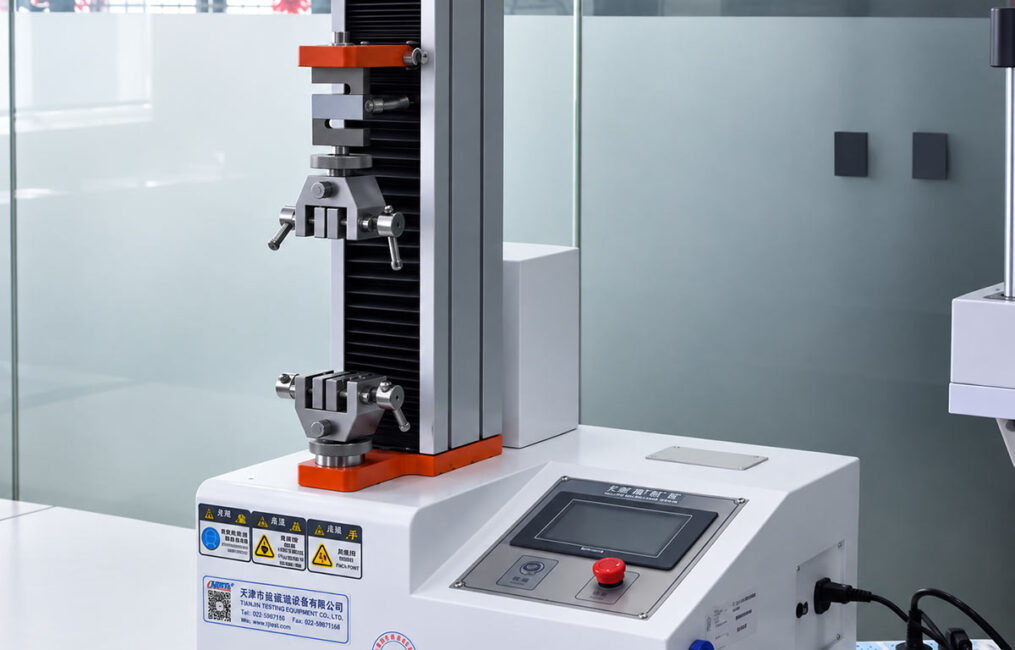
Tensile strength is how much force the cured material takes before it breaks. Elongation is how far it stretches before failing.
High tensile strength with low elongation gives a rigid, strong, brittle material — good for structural work. Moderate tensile strength with high elongation gives a flexible, tough material that absorbs impact — good for coatings and adhesives.
Durezza
Hardness measures surface resistance to indentation. Shore D is the usual scale for epoxies, running from about 70 (relatively soft) to 95 (very hard).
Higher hardness gives better scratch and abrasion resistance, and also more brittleness.
Impact strength
Impact strength measures resistance to sudden shock, normally by notched Izod test.
Low impact strength means the material chips or cracks when struck. High impact strength means it absorbs the blow.
Polyamide-cured systems typically have the highest impact resistance. Unmodified aliphatic amine systems are the most brittle.
Thermal, chemical, and electrical properties
Heat deflection temperature (HDT)
HDT is the temperature at which the material begins to deform under load, and it is the most practical single measure of heat resistance. For a bisphenol-A epoxy system:
| Hardener type | Typical HDT range | Notes |
|---|---|---|
| Aliphatic amine | 66–120°C | DETA around 66–76°C |
| Modified aliphatic amine | 90–140°C | Adducts and amidoamines raise the floor |
| Cycloaliphatic amine | 120–180°C | Rigid saturated ring |
| Aromatic amine | 138–220°C | Wide range; depends on the specific amine |
| Polyamide | 45–115°C | Lower HDT, higher flexibility |
| Phenalkamine | 90–130°C | Moderate, good balance |
| Anhydride | 105–150°C | Depends on anhydride structure |
| Imidazole | 117–166°C | Catalytic cure, high HDT |
Among amine hardeners, heat resistance rises from aliphatic to cycloaliphatic to aromatic. The resin side contributes too: a novolac backbone lifts the ceiling, and a flexibilized resin lowers it.
Coefficient of thermal expansion (CTE)
CTE measures how much the material expands and contracts with temperature. A high CTE builds stress at the interface between coating and substrate, which leads to delamination and cracking.
Water absorption and water resistance
Water absorption measures how much water the cured network takes up over time. Lower absorption means better water resistance. It matters most for marine coatings, buried pipe, and tank linings; indoor flooring tolerates considerably more.
Absorption depends on the hardener and on how completely the system cured:
- Boiling-water exposure separates the amine families sharply. DETA absorbs roughly 0.51%, while polyamide absorbs about 3.6% — the larger, more flexible polyamide network takes up far more water.
- Cure temperature changes the ranking. Cured at 20°C, polyamide absorbs less than DETA. Cured at 120°C, the order reverses and DETA absorbs less.
- Adhesion retention after 121°C water treatment runs best on phenolic-resin hardeners, then amine-based, then anhydride-based.
Across hardener chemistry rather than amine families, reported absorption generally runs lowest for anhydride-cured systems, higher for amine-cured systems, and highest for phenolic-resin-cured systems. Anhydrides form ester linkages that are less hydrophilic, while amines leave polar carbon–nitrogen bonds in the network. The figures depend heavily on cure schedule and test conditions. Note that phenolic-resin hardeners here means resole and novolac types — a different material from phenalkamine, despite the similar name.
Chemical resistance
Chemical resistance is how well the cured material stands up to acids, alkalis, solvents, fuels, and cleaning chemicals. Epoxy resins resist general acids, alkalis, oils, and solvents, but not nitric acid, acetic acid, or polar solvents such as acetone. Alkali resistance is generally better than acid resistance.
| Chimica | Aliphatic amine | Polyamide | Modified aromatic amine |
|---|---|---|---|
| 10% H₂SO₄ | Bene | Bene | Bene |
| 50% H₂SO₄ | Fair | Fair | Povero |
| 10% HCl | Bene | Bene | Bene |
| 10% NaOH | Eccellente | Eccellente | Eccellente |
| 50% NaOH | Eccellente | Eccellente | Eccellente |
| 10% HNO₃ | Bene | Bene | Bene |
| 50% HNO₃ | Fair | Fair | Povero |
| Acetone | Povero | Povero | Povero |
| Toluene | Bene | Bene | Bene |
The patterns behind the table:
- Aromatic amines give the best overall chemical resistance, particularly against solvents.
- Aliphatic amines are strong on alkali resistance because of the carbon–nitrogen bond structure.
- Anhydrides resist organic and inorganic acids well but degrade in alkali through ester hydrolysis.
- Phenolic-resin hardeners have excellent corrosion resistance, especially against acids, which is why they are used in anti-corrosion coatings and tank linings.
Electrical insulation properties
For electronic potting and electrical insulation, four properties matter: surface resistivity (resistance across the surface), volume resistivity (resistance through the material), dielectric constant (ability to store electrical energy), and dielectric loss (energy wasted as heat).
Aromatic amines give the best electrical insulation and are the usual choice for electronic potting compounds.
Colour and UV stability
Some hardeners yellow in sunlight; others stay clear for years. Unmodified aliphatic amines yellow quickly. Cycloaliphatic amines resist yellowing, because their saturated rings contain no UV chromophore to absorb light. This matters for clear coats, decorative floors, and any application where appearance is part of the specification.
The Seven Main Hardener Types Compared
Seven hardener types cover most ambient-cure and heat-cure work: unmodified aliphatic, modified aliphatic, cycloaliphatic, aromatic, polyamide, phenalkamine, and polyetheramine.
Waterborne is deliberately not in that list. It describes the form the product is supplied in, not its chemistry — a waterborne hardener still has one of the seven backbones underneath. Compare chemistry and delivery form as two separate questions.
Which family wins on which indicator is covered in detail in Aliphatic vs Cycloaliphatic vs Aromatic Amines Compared.
Processabilità
| Indicator | Aliphatic (unmodified) | Aliphatic (modified) | Cycloaliphatic | Aromatic | Polyamide | Phenalkamine | Polyetheramine |
|---|---|---|---|---|---|---|---|
| Physical state | Liquido | Liquido | Liquido | Solid (usually) | Liquid or semi-solid | Liquido | Liquido |
| Viscosità (mPa·s) | Very low (20–200) | Low–moderate (150–2000) | Low–moderate (80–1500) | High (solid) | High (3000–100000) | Low to high (300–50000) | Very low (80–400) |
| Cure temperature | Room temp | Room temp | Room temp | 80–200°C needed | Room temp | Room temp (down to 0°C) | Room temp |
| Pot life | Short (10–30 min) | Moderate (30–90 min) | Moderate (30–90 min) | Long (hours to days) | Long (2–8 hrs) | Moderate (20–60 min) | Moderate (30–90 min) |
| Exotherm | Alto | Moderate | Moderate | Basso | Basso | Moderate | Moderate |
| Mix ratio tolerance | Basso | Moderate | Moderate | Basso | Alto | Moderate | Moderate |
| Amine blush | Severe | Mild | None | None | None | None | None |
| Odour / toxicity | Alto | Moderate | Basso | Moderate–high | Basso | Low–moderate | Basso |
Cured properties
| Indicator | Aliphatic (unmodified) | Aliphatic (modified) | Cycloaliphatic | Aromatic | Polyamide | Phenalkamine | Polyetheramine |
|---|---|---|---|---|---|---|---|
| HDT | 66–120°C | 90–140°C | 120–180°C | 138–220°C | 45–115°C | 90–130°C | 80–150°C |
| Tensile strength | Moderate | Moderate–high | Alto | Very high | Moderate | Moderate | Moderate |
| Durezza | High (Shore D 85–92) | Alto | Alto | Very high (Shore D 90–95) | Moderate (Shore D 75–85) | Moderate–high | Moderate |
| Impact resistance | Povero | Moderate | Moderate | Povero | Eccellente | Bene | Bene |
| Flexibility | Basso | Low–moderate | Basso | Basso | Alto | Moderate | Alto |
| Chemical resistance | Bene | Bene | Eccellente | Eccellente | Bene | Good–excellent | Bene |
| Water resistance | Bene | Bene | Bene | Eccellente | Eccellente | Eccellente | Bene |
| UV resistance | Povero | Moderate | Eccellente | Povero | Bene | Bene | Bene |
| Electrical insulation | Bene | Bene | Bene | Eccellente | Moderate | Bene | Bene |
Cost and typical applications
| Indicator | Aliphatic (unmodified) | Aliphatic (modified) | Cycloaliphatic | Aromatic | Polyamide | Phenalkamine | Polyetheramine |
|---|---|---|---|---|---|---|---|
| Relative cost | $ | $–$$ | $$$ | $$$ | $$ | $$$ | $$ |
| Typical applications | General industrial, concrete repair | Industrial coatings, flooring | Decorative floors, clear coats | Aerospace, electronics, high-temperature service | Adhesives, flexible floors | Marine, pipelines, bridges | Composites, wind energy |
Choosing a Hardener
Work through the application first
Start from the application, then answer these in order.
1. What temperature will the coating see?
- Below 150°C — any type works
- 150–200°C — aromatic amines
- Above 200°C — specialty systems
2. Will it be exposed to UV?
- Yes (outdoor, skylights) — cycloaliphatic amines, or add UV stabilizers
- No (indoor, buried) — any type
3. What chemicals will contact it?
- Salt water — phenalkamines
- Solvents and fuels — aromatic amines
- Dilute acids and bases — most amine types
- No chemical exposure — decide on other factors
4. Does it need to flex or absorb impact?
- Yes (flooring, marine) — polyamides or polyetheramines
- No (structural, decorative) — aliphatic or cycloaliphatic amines
5. What is the production environment?
- Cold weather (below 10°C) — phenalkamines
- Humid conditions — phenalkamines or modified amines
- Standard factory conditions — any type
6. Is low VOC required?
- Yes — a waterborne grade of whichever chemistry fits the other answers
What modification changes
Base amines carry known drawbacks: volatility, odour, skin irritation, and amine blush. Manufacturers address them by reacting the amine into a larger molecule. Four routes are common.
| Route | What it improves | What it costs |
|---|---|---|
| Epoxy adduct | Lower volatility, less blush, better compatibility | Higher viscosity, shorter pot life |
| Amidoamine | Longer pot life, better water resistance | Lower reactivity, slower cure |
| Mannich base (phenalkamine) | Low-temperature cure, damp-substrate adhesion, chemical resistance | Higher cost |
| Cyanoethylation | Longer pot life, lower moisture sensitivity | Lower mechanical and electrical properties |
Each route moves the hardener along the indicators above rather than replacing them. Modification shifts where a product sits; it does not reverse the underlying backbone. For how these routes relate to the way curing agents are classified, see Epoxy Curing Agent Types: A Clear Classification Guide.
Selection mistakes worth avoiding
Choosing on price alone. Hardener is a small share of a formulation’s cost and a large share of its risk. A cheaper grade that shortens service life trades a small saving against the cost of a failed batch or a field failure.
Using unmodified aliphatic amines for marine work. They blush in humid conditions and do not hold up under constant water exposure. Phenalkamines or polyamides are the appropriate starting point.
Skipping surface preparation. No hardener compensates for a contaminated substrate. Primer and surface prep extend coating life more than any hardener change.
Ignoring pot life. If your pot life is 20 minutes and application takes 45, the system will fail regardless of how good the cured properties look on paper.
Not running a bench batch. Lab conditions rarely match field conditions. Test the actual resin–hardener pair under conditions close to production before committing to a full order.
Product Selection by Application
| Applicazione | Series to start with |
|---|---|
| Ship hull and marine | Phenalkamine |
| Pipeline coatings | Phenalkamine |
| Bridge and steel structures | Phenalkamine |
| Factory floors | Aliphatic or cycloaliphatic |
| Decorative floors | Cycloaliphatic |
| Structural adhesives | Polyamide |
| Flexible coatings | Polyamide or polyetheramine |
| Composites | Polyetheramine |
| Electronics potting | Aromatic |
| High-temperature coatings | Aromatic |
| Interior low-VOC | Waterborne |
A series is where to start a shortlist, not a drop-in answer. Grades within a series differ in viscosity, reactivity, and solids content, so match the technical data sheet for the candidate grade against your resin system and cure conditions.
Domande frequenti
How do I calculate the correct mix ratio?
Divide the AHEW (amine hydrogen equivalent weight) of the hardener by the EEW (epoxy equivalent weight) of the resin, then multiply by 100:
phr = (AHEW ÷ EEW) × 100
With a resin EEW of 185 and a hardener AHEW of 95: 95 ÷ 185 × 100 = 51.4 phr. Always weigh by mass, not volume.
What happens if I use too much hardener?
The excess amine does not find an epoxy group to react with. It stays in the film as unreacted amine, which plasticizes the network, promotes amine blush, reduces chemical resistance, and increases free-amine exposure for the applicator. Weigh precisely.
Can I blend different hardener types?
Yes — blending is standard practice when no single hardener meets both the process and the performance targets. Common pairings are aliphatic with polyamide, and polyamide with aromatic. A blend averages the properties of its components, so it trades a little of one for a little of another. It does not escape a backbone limit: adding an aromatic amine to an aliphatic raises heat resistance somewhat without reaching what a pure aromatic system delivers. Check compatibility and cure behaviour on a bench batch before production.
How do I choose between fast cure and long pot life?
Match the hardener to your work pace. Applying quickly in small batches suits fast cure. Needing hours of open time means choosing a longer pot life, even at the cost of slower production.
What is the shelf life of these hardeners?
Most amine hardeners keep 12–18 months sealed at room temperature. Store away from moisture and direct sunlight. Waterborne products must not be allowed to freeze.
Related Articles
- Epoxy Curing Agent Types: A Clear Classification Guide
- Aliphatic vs Cycloaliphatic vs Aromatic Amines Compared
If you are working through a hardener selection and want a second opinion, send us the cure conditions and the performance targets. We will tell you which indicators are actually at risk in your system and send the technical data for the grades that fit.
Request a technical consultation and TDS →
Professional Coating & Chemical Solutions
Need help selecting the right raw materials for your formulation? From iron oxide pigments and epoxy resins to redispersible polymer powders, we provide high-performance products with expert technical support.
Richiedi un preventivo