How to Compare Iron Oxide Red TDS: A Technical Buyer’s Guide
 Joe•
Joe•
In the global chemical market, selecting the right Iron Oxide Red pigment goes beyond just looking at a red powder. The Technical Data Sheet (TDS) is the blueprint of how that pigment will behave in your concrete, paint, or plastic formulation. Using the Standard Grade Technical Data (covering popular models like 110, H130, and 190)
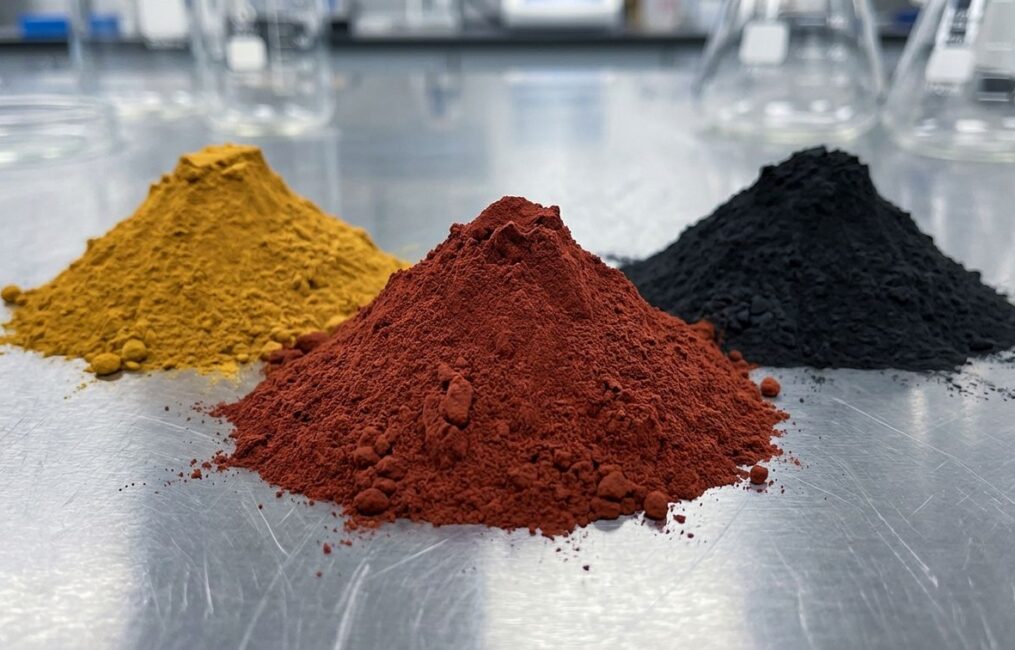
In the global chemical market, selecting the right Iron Oxide Red pigment goes beyond just looking at a red powder. The Technical Data Sheet (TDS) is the blueprint of how that pigment will behave in your concrete, paint, or plastic formulation.
Using the Standard Grade Technical Data (covering popular models like 110, H130, and 190) as our benchmark, this guide will show you exactly which metrics define a high-performance pigment.
1. Understanding the Model Spectrum: From 110 to 190
While the chemical base remains Fe2O3, the model numbers represent a shift in color shade and particle size.
- Yellowish-Red (e.g., 110, 101): Brighter, warmer tones.
- Medium-Red (e.g., 120, H130): The industry workhorses, offering the most balanced red shade.
- Bluish-Red (e.g., 190, 180): Deeper, cooler tones often used in high-end masonry and coatings.
2. Purity and Chemical Stability
A “Standard Grade” Iron Oxide Red must meet strict chemical thresholds to ensure it doesn’t react negatively with other ingredients in your mix.
- Content (Fe2O3): ≥ 95%High purity ensures color intensity and weather resistance. Anything lower suggests the presence of fillers that may dilute the pigment’s performance.
- pH Value: 3 ~ 7This range is critical. For concrete applications, a neutral pH ensures the pigment won’t interfere with the cement’s hydration or setting time.
- Water Soluble Salts: ≤ 0.3%Low salt content is vital to prevent efflorescence—the white chalky substance that can ruin the appearance of red bricks or pavers.
3. Physical Performance & Efficiency
These metrics directly impact your production costs and the “finish” quality of your product.
- Oil Absorption: 15 ~ 25 g/100gThis tells you how much binder (oil/resin) is needed to wet the pigment. Staying within the 15 ~ 25 range allows for optimal flow and cost-efficiency in liquid formulations.
- Tamped Density: 0.7 ~ 1.1 g/cm³This influences how the powder settles. It is a key factor for logistics and for calculating the volume required in automated dosing systems.
- Particle Shape: SphericalUnlike needle-like structures, spherical particles provide better dispersibility, meaning you spend less time and energy on high-shear mixing to get a smooth, streak-free color.
4. The Quality “Killers”: Moisture and Residue
Even a 1% deviation in these areas can lead to batch failure.
- Sieve Residue (on 45µm): ≤ 0.3%Also known as 325 mesh residue. High residue means coarse particles that cause “hot spots” or speckling in plastics and coatings.
- Moisture: ≤ 1.0%Excess moisture leads to clumping. To ensure a free-flowing powder that integrates perfectly into your dry mix, always insist on a moisture level below 1%.
5. Visual Consistency: The “Golden” Comparison
When comparing samples from two different suppliers, the Colorimetric Data is your ultimate judge:
- Color Difference (ΔE): ≤ 1.0Human eyes can often detect a ΔE above 1.0. A professional supplier guarantees that their batch-to-batch variation stays within this tiny margin.
- Tinting Strength: 95% ~ 105%This measures the pigment’s “punch.” A higher tinting strength means you can achieve your target color using less pigment, effectively lowering your cost per ton of finished goods.
Summary: Standard Grade Reference Table
| Parameter | Standard Grade Requirement |
| Common Models | 110, 120, H130, 130S, 190, 180 |
| Fe2O3 Content | ≥ 95% |
| Oil Absorption | 15 ~ 25 g/100g |
| Sieve Residue (45µm) | ≤ 0.3% |
| pH Value | 3 ~ 7 |
| Density | 0.7 ~ 1.1 g/cm³ |
| Tinting Strength | 95% ~ 105% |
Conclusion: Don’t Settle for “Red Enough”
In B2B sourcing, the cheapest red powder often ends up being the most expensive due to high oil absorption or poor tinting strength. Always cross-reference your supplier’s COA (Certificate of Analysis) against these Standard Grade benchmarks.