Iron Oxide Red: The Ultimate Guide to Properties, Grades, and Industrial Applications
 Joe•
Joe•
Iron Oxide Red (Fe2O3) is one of the most versatile inorganic pigments in the global chemical industry. Known for its exceptional lightfastness, weather resistance, and non-toxicity, it is the primary coloring agent for everything from city infrastructure to high-performance coatings. Selecting the right grade requires a deep understanding of how its physical and chemical properties
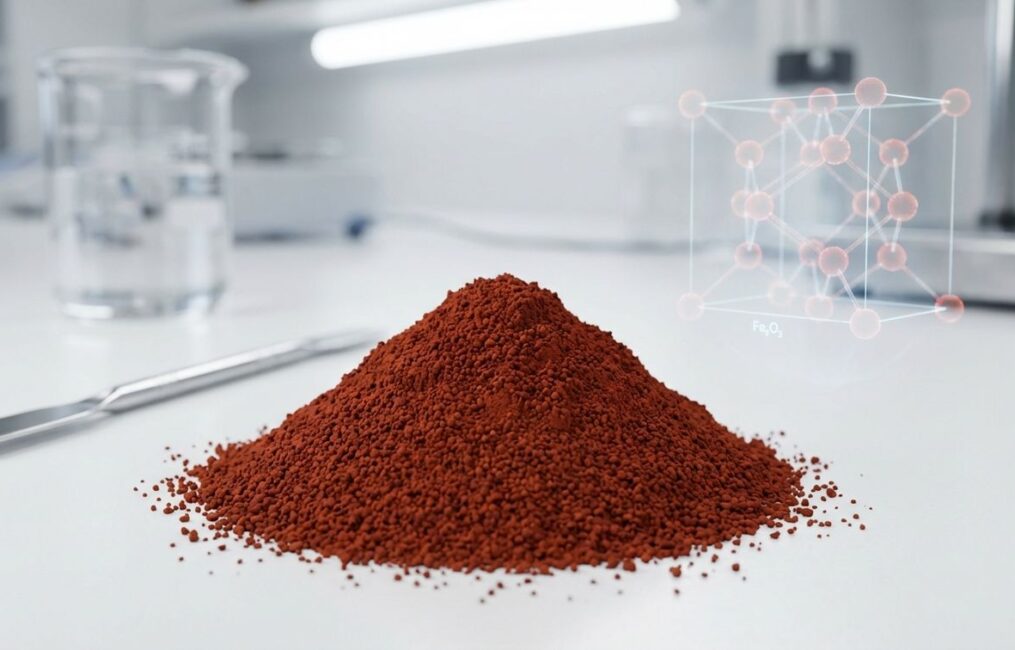
Iron Oxide Red (Fe2O3) is one of the most versatile inorganic pigments in the global chemical industry. Known for its exceptional lightfastness, weather resistance, and non-toxicity, it is the primary coloring agent for everything from city infrastructure to high-performance coatings.
Selecting the right grade requires a deep understanding of how its physical and chemical properties align with specific industrial needs.
1. Core Properties of Iron Oxide Red
Understanding the inherent characteristics of Fe2O3 is the first step in successful formulation.
- Chemical Stability: It is highly resistant to acids, alkalis, and UV light, ensuring that colors do not fade even in harsh outdoor environments.
- Non-Toxicity: Iron oxide red is environmentally friendly and safe for use in various applications, including construction and cosmetics.
- High Tinting Strength: Even in small dosages, it provides deep, opaque coloration with excellent covering power.
2. Technical Specifications & Benchmarks (Standard Grade)
For technical buyers, the Technical Data Sheet (TDS) is the blueprint for performance. Below are the industry-standard benchmarks for high-quality synthetic iron oxide red:
| Parameter | Standard Requirement | Impact on Application |
| $Fe_2O_3$ Content | ≥ 95 % | Ensures maximum purity and color intensity. |
| Oil Absorption | 15-25 g/100g | Determines resin/binder usage and cost-efficiency. |
| Sieve Residue (45μm) | ≤ 0.3 % | Prevents “hot spots” or speckling in finishes. |
| pH Value | 3.0 – 7.0 | Neutral range ensures compatibility with cement. |
| Tamped Density | 0.7 – 1.1 g/cm³ | Affects logistics and automated dosing precision. |
| Tinting Strength | 95% – 105% | Measures the efficiency of the pigment dosage. |
| Color Difference (△E) | ≥ 1.0 | Ensures batch-to-batch visual consistency. |
3. Industrial Model Spectrum: 110 to 190
Iron oxide red is classified into different “grades” or “models” based on their specific color shade and particle size:
- Yellowish-Red (e.g., 110, 101): Brighter, warmer tones with smaller particle sizes.
- Medium-Red (e.g., 120, H130, 130S): The most balanced and commonly used industrial reds.
- Bluish-Red (e.g., 190, 180): Deeper, cooler tones often used for high-end masonry and specialized coatings.
4. Key Industrial Applications
By merging technical specifications with application scenarios, we can see how specific grades serve different sectors:
A. Construction and Infrastructure
Iron oxide red is the gold standard for coloring concrete, bricks, and tiles.
- Why it works: Its alkali resistance means it won’t react with cement.
- Technical Tip: Use grades with low water-soluble salts (≤ 0.3%) to prevent efflorescence (white chalky residue) on finished surfaces.
B. Paints and Coatings
Used in everything from automotive primers to decorative wall paints.
- Why it works: Provides excellent UV protection and anti-corrosion properties.
- Technical Tip: Look for low Sieve Residue (≤ 0.3%) to ensure a smooth, high-gloss finish without clogging spray nozzles.
C. Plastics and Masterbatches
Used to color PVC, ABS, and polyolefins.
- Why it works: High heat stability ensures the pigment doesn’t degrade during high-temperature extrusion or molding.
- Technical Tip: Spherical particle shapes provide better dispersibility, reducing the energy needed for mixing.
5. Conclusion: Sourcing the Right Grade
In B2B procurement, the “cheapest” pigment is often the most expensive if it has high oil absorption or poor tinting strength. Always cross-reference a supplier’s Certificate of Analysis (COA) against the standard benchmarks mentioned above to ensure your production remains efficient and consistent.