Iron Oxide Black: The Ultimate Guide to Properties, Applications & Sourcing
 Joe•
Joe•
1. What is Iron Oxide Black? (Introduction) Iron Oxide Black (CI 77499), chemically known as Ferrosoferric oxide ($Fe_3O_4$), is a synthetic inorganic pigment prized for its deep black hue, exceptional tinting strength, and weather resistance. Unlike natural magnetite, synthetic iron oxide black offers superior purity and consistency for industrial use. Key Manufacturing Processes 2. Technical
1. What is Iron Oxide Black? (Introduction)
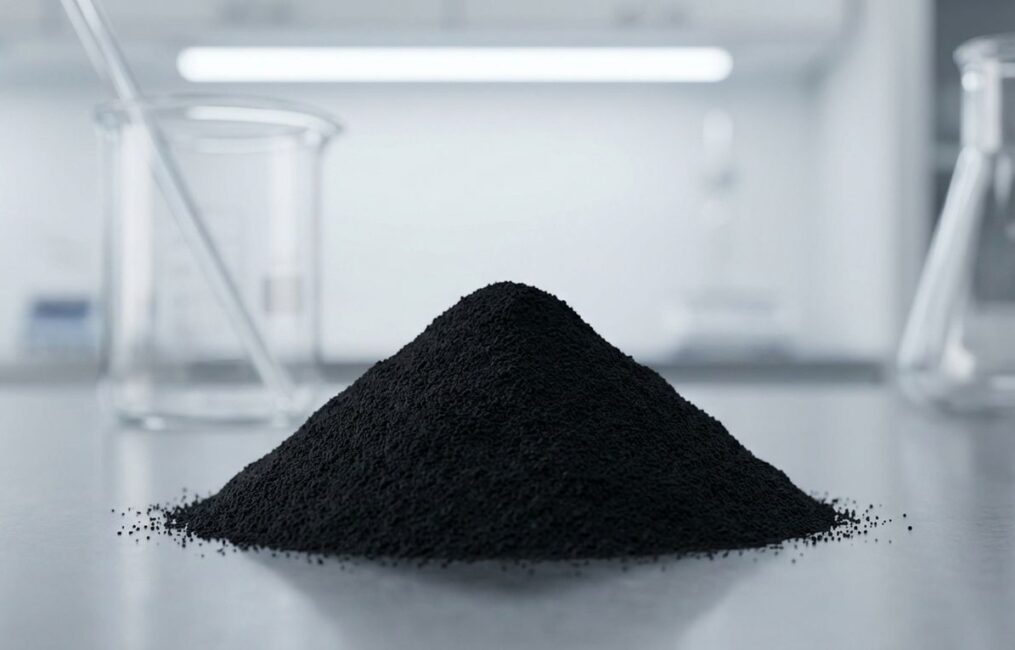
Iron Oxide Black (CI 77499), chemically known as Ferrosoferric oxide ($Fe_3O_4$), is a synthetic inorganic pigment prized for its deep black hue, exceptional tinting strength, and weather resistance. Unlike natural magnetite, synthetic iron oxide black offers superior purity and consistency for industrial use.
Key Manufacturing Processes
- Precipitation Method: Ensuring fine particle size and high reactivity.
- Laux Process: A byproduct of aniline production, offering unique cost-effectiveness for large-scale applications.
2. Technical Specifications & Grade Standards
To ensure the best performance in your formulations, understanding the physical and chemical properties is essential.
| Property | Typical Value | Testing Method |
| $Fe_3O_4$ Content | $\ge 90\%$ | ISO 1248 |
| Oil Absorption | 15–25 g/100g | ISO 787-5 |
| Sieve Residue (45μm) | $\le 0.3\%$ | ISO 787-7 |
| pH Value | 5.0–8.0 | ISO 787-9 |
| Particle Shape | Spherical / Cubic | SEM Analysis |
3. Industrial Applications: The Versatile Pigment
Iron Oxide Black is the backbone of several heavy industries. Depending on your specific sector, the requirements for particle size and heat stability may vary:
- Coatings & Paint: Ideal for primers and industrial finishes due to its anti-corrosive properties.Read more: Comprehensive Guide to Black Iron Oxide for Paint
- Construction & Concrete: The most cost-effective way to achieve jet-black masonry, roof tiles, and pavers.Read more: Iron Oxide Black Pigment for Concrete
- Ceramics & Glazes: Stable at high temperatures, providing rich black or brown tones.Read more: Utilizing Black Iron Oxide in Ceramic Pigments
- Polymers & Plastics: Used in masterbatches for consistent coloring in PVC, PE, and PP.Read more: Black Iron Oxide in Polymer Applications
4. Iron Oxide Black vs. Carbon Black
When choosing a black pigment, the most common dilemma is deciding between Iron Oxide and Carbon Black. While Carbon Black offers higher jetness, Iron Oxide Black provides better UV stability and is non-migratory in certain polymers.
Explore the detailed comparison:Iron Oxide Black vs. Carbon Black: Which is right for you?
5. Handling, Storage & Safety
Safety is paramount in chemical sourcing. Iron Oxide Black is generally classified as non-hazardous, but proper dust control and PPE (Personal Protective Equipment) are required during handling.
- Shelf Life: 3-5 years if stored in a cool, dry place.
- Compliance: Ensure your batch meets REACH and RoHS standards.
Download the full safety document:Black Iron Oxide SDS & Safety Guide
6. Sourcing & Quality Control: How to Evaluate Suppliers
Buying in bulk requires more than just looking at the price. A reliable supplier should provide:
- Batch Consistency: Delta E ($\Delta E$) color deviation should be $< 1.0$.
- TDS/COA Support: Every shipment must come with a Certificate of Analysis.
- Sample Testing: Always request a 500g sample for lab-scale formulation tests before container-load orders.