Industrial PVA Supply: Understanding Hydrolysis & Viscosity
 Joe•
Joe•
Understanding PVA Specifications: Core Parameters Polyvinyl Alcohol (PVA) is a versatile, water-soluble synthetic polymer used extensively across the construction, textile, paper, and adhesive industries. For procurement officers and R&D engineers, selecting the correct PVA grade is not merely a matter of availability but of precise chemical alignment with the application. The performance of PVA is
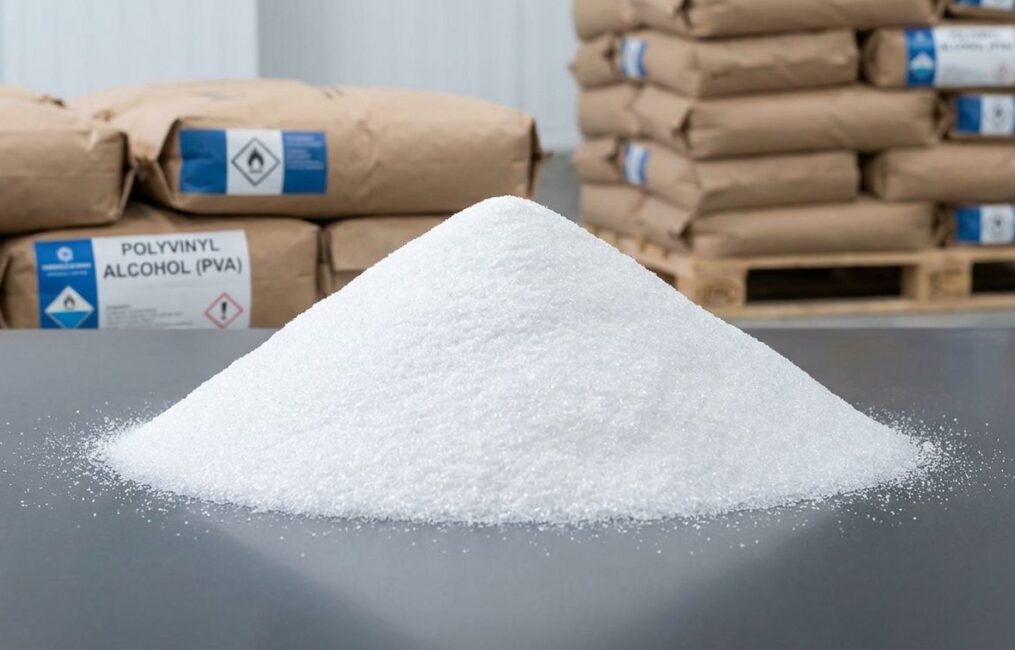
Understanding PVA Specifications: Core Parameters
Alcool polyvinylique (PVA) is a versatile, water-soluble synthetic polymer used extensively across the construction, textile, paper, and adhesive industries. For procurement officers and R&D engineers, selecting the correct PVA grade is not merely a matter of availability but of precise chemical alignment with the application. The performance of PVA is primarily dictated by two critical specifications: the Degree of Hydrolysis et le Degree of Polymerization (which correlates directly to molecular weight and viscosity).
At rawchemicalmart.com, we ensure that every batch of PVA adheres to strict quality control standards, providing consistent results whether you are formulating high-strength tile adhesives or manufacturing textile warp sizing.
What is Degree of Hydrolysis?
The degree of hydrolysis refers to the percentage of acetate groups in the original Polyvinyl Acetate (PVAc) that have been converted into hydroxyl groups during the saponification process. This parameter is the single most influential factor in determining the chemical properties of the final PVA resin.
- High Hydrolysis (Fully Hydrolyzed): Typically ranges from 98.0% to 99.8%. As the number of hydroxyl groups increases, hydrogen bonding between polymer chains becomes stronger. This results in excellent water resistance in the dried film but requires higher temperatures (typically above 90°C) to dissolve the resin in water.
- Low Hydrolysis (Partially Hydrolyzed): Typically ranges from 86.0% to 89.0%. The presence of residual acetate groups weakens the intermolecular hydrogen bonding. This makes the resin soluble in cold water and gives it superior surface activity and flexibility.
Defining Molecular Weight and Viscosity
Molecular weight in PVA is usually described by the Degree of Polymerization (DP) or, more practically for end-users, by the viscosity of a 4% aqueous solution at 20°C. There is a direct correlation: higher molecular weight leads to higher viscosity.
Viscosity determines the rheology of your formulation. It impacts the flow properties during processing and the physical strength of the final product.
- Low Viscosity (3–10 mPa.s): Used where high solid content is needed without excessive thickening, such as in paper coatings or specific textile sizes.
- Medium Viscosity (10–30 mPa.s): The industry standard for general adhesives and construction additives.
- High Viscosity (40–60+ mPa.s): Provides high tensile strength and thickening power, ideal for heavy-duty construction binders and thickeners.
Sourcing Industrial Grade PVA?
As a leading global supplier, Raw Chemical Mart provides a comprehensive portfolio of Polyvinyl Alcohol (PVA) tailored for high-volume manufacturing, from textiles to advanced adhesives.
Classification of PVA Grades
Navigating the global market for PVA requires a clear understanding of how these materials are classified. The interplay between hydrolysis and viscosity creates a matrix of grades suitable for distinct industrial environments.
Fully Hydrolyzed vs. Partially Hydrolyzed PVA
The distinction between fully and partially hydrolyzed grades is the first filter in the selection process.
Fully Hydrolyzed PVA (e.g., 17-99, 24-99) is characterized by high tensile strength, strong film formation, and resistance to solvents and oils. In the construction industry, these grades are often preferred for applications requiring durability and moisture resistance.
Partially Hydrolyzed PVA (e.g., 17-88, 24-88) offers unique benefits in adhesion to hydrophobic surfaces due to the residual acetate groups. They are widely used as protective colloids in emulsion polymerization (manufacturing PVAc glues) and in re-moistenable adhesives (like postage stamps or envelopes).
PVA Solubility vs. Hydrolysis Relationship
Solubility is a key processing constraint. Procurement teams must ensure their production facilities have the capability to dissolve the specific grade purchased.
Procurement Tip: Do not assume all PVA dissolves easily. Fully hydrolyzed grades (98%+) require a cooking process at ~95°C for 30-60 minutes to fully dissolve. Partially hydrolyzed grades (87-89%) can dissolve at room temperature or with mild heating, saving energy costs in production.
Technical Comparison: Common PVA Grades
To facilitate accurate ordering from rawchemicalmart.com, it is essential to understand the standard nomenclature used in the chemical industry. While brand names vary, the numerical codes often follow a standard logic.
Interpreting Grade Codes (e.g., 17-88, 24-88)
Most standard PVA grade codes consist of four digits (e.g., PVA 1788 ou PVA 2488). This code acts as a quick reference for the material’s specifications:
- First Two Digits (e.g., 17 or 24): Represent the approximate viscosity of a 4% solution in mPa.s (cps). A “17” implies a viscosity around 17 mPa.s.
- Last Two Digits (e.g., 88 or 99): Represent the degree of hydrolysis. An “88” indicates roughly 88% hydrolysis (partially hydrolyzed), while “99” indicates ~99% (fully hydrolyzed).
PVA 1788 vs. 2488: Key Differences & Uses
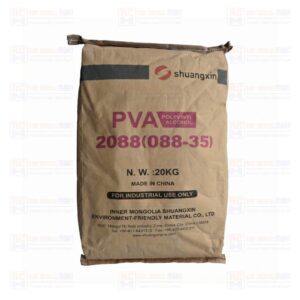
Two of the most frequently exported grades at Raw Chemical Mart are PVA 1788 and PVA 2488. While both are partially hydrolyzed, their viscosity difference dictates their application suitability.
| Paramètre | PVA 17-88 (088-20) | PVA 24-88 (088-50) |
|---|---|---|
| Hydrolysis (mol %) | 87.0 – 89.0% | 87.0 – 89.0% |
| Viscosity (mPa.s, 4% sol) | 20.0 – 24.0 (approx) | 44.0 – 52.0 (approx) |
| Volatile Content (%) | ≤ 5.0% | ≤ 5.0% |
| Teneur en cendres (%) | ≤ 0,5% | ≤ 0,5% |
| Primary Application | Emulsion polymerization, general adhesives, textile sizing. | Construction mortars, putty powder, high-viscosity thickeners. |
PVA 1788 is the workhorse of the adhesive industry, offering a balance of flow and binding power. PVA 2488, with its higher molecular weight, is preferred in construction dry-mix mortars where better water retention and thickening effects are required to improve the workability of the cement or gypsum base.
How to Choose the Right PVA Grade
Selecting the right raw material is a balance between performance requirements and processing capabilities. At rawchemicalmart.com, our technical team assists clients in matching grades to specific industrial lines.
Matching Viscosity to Application Needs
Viscosity dictates the “body” of your product. If you are manufacturing a sprayable coating or an impregnation agent, high viscosity grades (like 24-88 or 26-99) will clog nozzles and fail to penetrate substrates. Conversely, if you are formulating a vertical tile adhesive that requires anti-sagging properties, a low viscosity grade (like 05-88) will be too runny and fail to hold the tile in place.
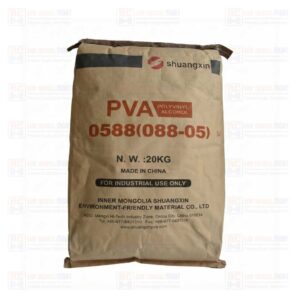
- For Penetration & Coating: Choose Low Viscosity (PVA 0588).
- For Binding & Film Strength: Choose Medium to High Viscosity (PVA 1788, 2488).
Selecting Based on Water Resistance Requirements
The environment in which the final product will be used is the deciding factor for hydrolysis selection.
If the end product is an interior wall putty or a label adhesive that will not face high humidity, partially hydrolyzed grades (88 series) are excellent due to their solubility and ease of use. However, for exterior coatings, wood adhesives for damp environments (D3/D4), or textile finishes requiring durability, fully hydrolyzed grades (99 series) are mandatory to prevent the film from re-dissolving upon contact with moisture.
Safety & Handling: While PVA is generally non-toxic and biodegradable, dust explosions can occur if fine powder is suspended in the air in high concentrations. Always ensure proper ventilation and grounding during handling. Refer to the MSDS provided by rawchemicalmart.com with every shipment for detailed safety protocols.
By understanding the precise interplay between molecular weight and hydrolysis, manufacturers can optimize their formulations for both cost and performance. Whether you require FCL shipments of standard PVA 2488 or specialized low-ash grades, rawchemicalmart.com provides the global logistics and technical expertise to keep your supply chain moving efficiently.