

Brève introduction :
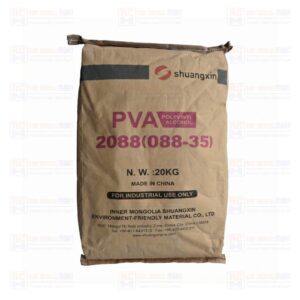
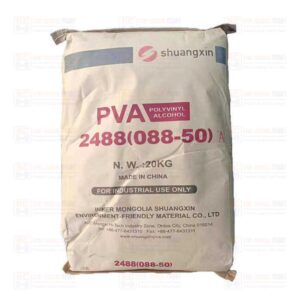
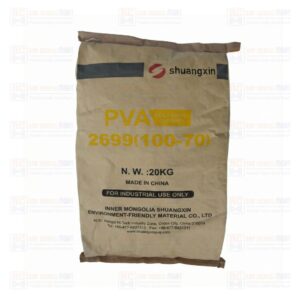
Polyvinyl Alcohol 26-88 (also known as PVA 2688 or 088-60) is an ultra-high viscosity, partially hydrolyzed grade polymer.
Avec une viscosité de ≥ 60.0 mPa.s, PVA 26-88 offers the highest molecular weight and thickening capability in the 88-series. It is specifically engineered for critical industrial processes such as suspension polymerization of PVC and Polystyrene, where superior protective colloid properties are required to control particle size and porosity.
Caractéristiques:
| Article | Spécification |
|---|---|
| Degré d'alcoolyse (mol%) | 98.00 - 100 |
| Viscosité (mPa·s) | 76.0 - 85.0 |
| Teneur en composés volatils (wt%, max) | 5 |
| Pureté (wt%, min) | 93.5 |
| valeur du pH | 5 ~ 7 |
| Teneur en cendres (wt%, max) | 0.5 |
Caractéristiques principales :
- Ultra-High Viscosity: Provides exceptional thickening power and solution stability even at low concentrations.
- Solubilité: Soluble in water. Requires dissolving in hot water (above 90°C) to ensure the high molecular weight chains are fully hydrated.
- Protective Colloid: Offers superior surface activity and interface protection, making it critical for suspension polymerization processes.
- Propriétés cinématographiques: Forms a tough, flexible film with excellent barrier properties against Hydrogen ($H_2$), Nitrogen ($N_2$), and Oxygen ($O_2$).
- Réactivité: Capable of cross-linking with boric acid or undergoing acetalization for improved water resistance.
Applications :
PVA 26-88 is chosen for applications requiring maximum viscosity and stabilization:
- Suspension Polymerization (PVC/PS): Used as a primary dispersing agent (suspension granulating agent) for producing Polyvinyl Chloride (PVC) et Polystyrene (PS) granules. It controls particle size distribution and porosity.
- PVAc Emulsions: Acts as a high-efficiency protective colloid for vinyl acetate polymerization, improving emulsion stability and viscosity.
- Thickeners: Used widely as a thickening agent in latex paints, paper coatings, and textile pastes due to its high molecular weight.
- Photosensitive Materials: Key component in manufacturing fluorescent photosensitive agents and screens.
- Re-wettable Adhesives: Provides the necessary body and tack for remoistening glues.
Emballage:
- Conditionnement: 25 kg per bag (Kraft paper bag with plastic liner).
Produit Stockage:
- StockageÀ conserver dans un endroit frais, sec et bien ventilé pour éviter l'agglomération et l'absorption d'humidité.
FAQ :
Q: What is the difference between PVA 24-88 and PVA 26-88?
A: The main difference is viscosity and molecular weight.
-
PVA 24-88: Viscosity range is 43.0 – 65.0 mPa.s.
-
PVA 26-88: Viscosity is ≥ 60.0 mPa.s (typically higher). PVA 26-88 is used when you need the absolute maximum thickening effect or specific particle size control in PVC production that 24-88 cannot achieve.
Q: Why is PVA 26-88 used in PVC production?
A: In PVC suspension polymerization, PVA 26-88 acts as a dispersing agent. Its high degree of polymerization and partial hydrolysis help form a protective membrane around monomer droplets, preventing coalescence and ensuring uniform PVC resin particle size.
Q: Is PVA 26-88 soluble in cold water?
A: No, due to its very high molecular weight (indicated by high viscosity), it strongly requires hot water (90°C+) and sufficient agitation time to dissolve completely.
Looking for Ultra-High Viscosity PVA? Rearch out to us. We supply premium Polyvinyl Alcohol 26-88 for PVC manufacturing and industrial thickening.