Fournisseur industriel de PVA : Encollage et adhésifs pour chaînes textiles
 Joe•
Joe•
Le rôle du PVA comme adhésif textile. L'alcool polyvinylique (PVA) est un élément fondamental de l'industrie textile moderne. Adhésif et liant de qualité supérieure, il assure la transition entre le filage des fibres brutes et le tissage à grande vitesse. Contrairement aux liants naturels traditionnels, le PVA offre une polyvalence synthétique permettant aux ingénieurs textiles un contrôle précis.
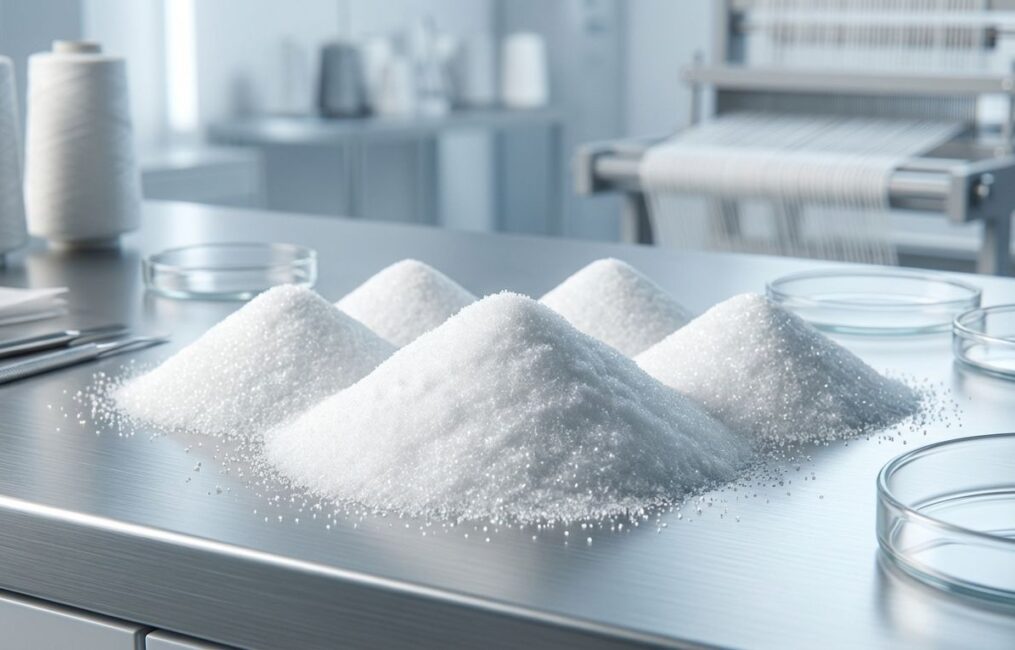
Le rôle du PVA comme adhésif textile
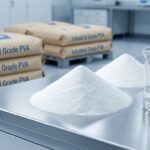
Alcool polyvinylique (PVA) Le PVA est un élément essentiel de l'industrie textile moderne. Agent adhésif et liant de qualité supérieure, il assure la transition entre le filage des fibres brutes et le tissage à grande vitesse. Contrairement aux liants naturels traditionnels, le PVA offre une polyvalence synthétique permettant aux ingénieurs textiles de contrôler précisément l'adhérence, la flexibilité du film et sa solubilité dans l'eau.
À rawchemicalmart.com, Nous savons que l'efficacité d'une usine de tissage dépend fortement de la qualité des auxiliaires chimiques utilisés. Le PVA est particulièrement apprécié pour son adhérence exceptionnelle aux fibres hydrophiles (comme le coton et la viscose) et hydrophobes (comme le polyester et le nylon). Cette double propriété en fait le choix privilégié pour l'encollage des fils mélangés, garantissant ainsi l'intégrité du film protecteur même sous les fortes contraintes mécaniques des métiers à tisser modernes.
Conseil en matière d'approvisionnement : Lors du choix du PVA pour les applications textiles, le Degré d'hydrolyse et Viscosité Ce sont les deux paramètres critiques. Les grades partiellement hydrolysés (87-89%) offrent généralement une meilleure adhérence aux fibres hydrophobes en raison d'une tension superficielle plus faible, tandis que les grades entièrement hydrolysés (98-99%) offrent une résistance à l'eau et une résistance à la traction supérieures.
PVA dans l'encollage de chaîne : optimisation des performances du fil
L'encollage de la chaîne est l'application la plus critique du PVA dans le secteur textile. L'objectif principal de Encollage de chaîne textile PVA Il s'agit d'enduire les fils de chaîne d'un film protecteur qui réduit l'abrasion et la casse lors du tissage. Avec l'augmentation des vitesses de tissage, la demande en agents d'encollage haute performance a connu une croissance exponentielle.
Propriétés des agents d'encollage de fils PVA à haute efficacité
Pour garantir un tissage sans couture, un agent d'encollage doit posséder des propriétés physico-chimiques spécifiques. Le PVA excelle dans ce domaine en formant un film résistant, souple et durable autour du fil. Ce film lisse les fibres saillantes (effet duveteux) et pénètre au cœur du fil pour lier les fibres entre elles.
Les principaux paramètres techniques des agents d'encollage PVA à haute efficacité comprennent :
- Force du film : Sa haute résistance à la traction empêche le film d'encollage de se fissurer sous la tension du métier à tisser.
- Stabilité de la viscosité : Les solutions de PVA conservent une viscosité constante même après un chauffage prolongé dans la boîte de calibrage, assurant ainsi un revêtement uniforme.
- Élongation: L'élasticité du film PVA correspond à l'allongement du fil, empêchant ainsi l'encollage de s'effriter lors de l'étirement.
| Type de grade PVA | Degré d'hydrolyse (mol%) | Viscosité (mPa.s) | Application cible |
|---|---|---|---|
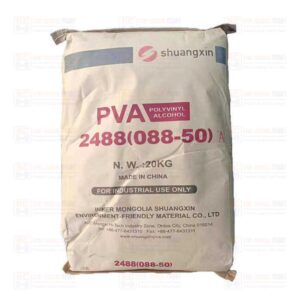
| Faible viscosité (par exemple, PVA 0588) | 87,0 – 89,0 | 5.0 – 6.0 | Encollage à haute concentration, fils filés, mélanges de polyester. |
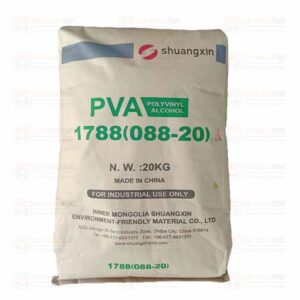
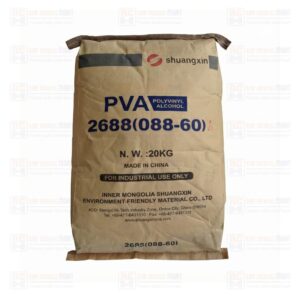
| Viscosité moyenne (par exemple, PVA 1788) | 87,0 – 89,0 | 20,0 – 26,0 | Encollage général de la chaîne, couchage du papier, adhésifs. |
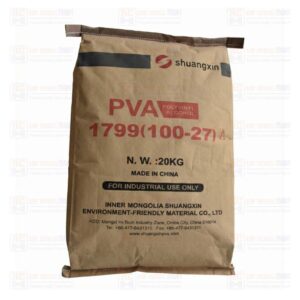
| Entièrement hydrolysé (par exemple, PVA 1799) | 98,0 – 99,0 | 24,0 – 32,0 | Encollage du coton, finition des tissus rigides, production de fibres Vinylon. |
Avantages par rapport aux amidons naturels
Si l'amidon est traditionnellement utilisé pour l'apprêtage du coton, il s'avère insuffisant pour le traitement des mélanges synthétiques. Encollage de chaîne textile PVA offre des avantages distincts par rapport aux amidons naturels et aux dérivés d'amidon modifiés :
- Option supplémentaire inférieure requise : Le PVA est plus efficace ; une plus petite quantité suffit pour obtenir la même protection qu'une plus grande quantité d'amidon, ce qui réduit la consommation de produits chimiques.
- Adhérence supérieure aux matières synthétiques : L'amidon adhère mal au polyester. La structure chimique du PVA permet une forte liaison avec les fibres synthétiques, ce qui le rend indispensable pour les mélanges T/C (Tetoron/Coton).
- Perte de poils réduite : La formation d'un film résistant de PVA réduit considérablement le détachement de poussières d'encollage dans l'atelier de tissage, améliorant ainsi l'environnement de travail et réduisant la maintenance des machines.
Vous cherchez à vous approvisionner en PVA de qualité industrielle ?
En tant que fournisseur mondial de premier plan, Raw Chemical Mart propose une gamme complète d'alcool polyvinylique (PVA) adaptée à la fabrication à grand volume, des textiles aux adhésifs de pointe.
Le procédé de désencollage PVA
L'un des principaux avantages de l'utilisation de l'alcool polyvinylique est sa facilité d'élimination après le tissage. Le désencollage est crucial car tout résidu d'encollage peut perturber les étapes de teinture et de finition suivantes.
Considérations relatives à la solubilité et au traitement de l'eau
Le PVA est soluble dans l'eau, ce qui simplifie le désencollage. Généralement, le tissu est lavé à l'eau chaude, ce qui provoque le gonflement, la dissolution et l'élimination du film de PVA. Cependant, l'impact environnemental des effluents de désencollage est un facteur essentiel pour les usines textiles modernes.
Étant donné que le PVA contribue à la demande chimique en oxygène (DCO) des eaux usées, les usines utilisent souvent des systèmes de récupération du PVA. Grâce à des membranes d'ultrafiltration, les usines peuvent récupérer le PVA dissous dans la liqueur de désencollage et le réutiliser, ce qui réduit considérablement les coûts et l'impact environnemental. rawchemicalmart.com, Nous fournissons des qualités de PVA de haute pureté et thermiquement stables, ce qui les rend idéales pour les boucles de récupération et de recyclage.
Fabrication de fibres Vinylon à partir de PVA
Au-delà de l'encollage et du revêtement, le PVA est la matière première pour Fibre Vinylon (également connue sous le nom de fibre Vinal ou d'alcool polyvinylique). Cette fibre synthétique est unique car ses propriétés d'absorption d'humidité sont plus proches de celles du coton que celles de toute autre fibre synthétique.
Structure chimique et durabilité des fibres
Pour produire du Vinylon, le PVA est dissous dans l'eau, filé en fibres, puis soumis à un traitement thermique et à une acétalisation (généralement avec du formaldéhyde). Ce procédé transforme le PVA soluble dans l'eau en une fibre insoluble dans l'eau.
Caractéristiques principales du Vinylon :
- Haute ténacité : Excellente résistance à la rupture.
- Résistance chimique : Très résistant aux acides, aux alcalis et aux huiles, il convient parfaitement aux vêtements de travail industriels, aux filtres et aux filets de pêche.
- Résistance aux intempéries : Résistance supérieure à la lumière du soleil et à la dégradation biologique par rapport à de nombreux autres matériaux synthétiques.
PVA dans l'ennoblissement et le revêtement des textiles
L'apprêt textile est l'étape finale de la production textile, déterminant l'aspect, le toucher et la fonctionnalité du matériau. Le PVA est largement utilisé comme agent rigidifiant et liant à ce stade.
PVA pour le revêtement et le raidissement des tissus
Pour les applications exigeant une finition rigide, comme les entoilages, les toiles ou les têtes de rideaux, le PVA entièrement hydrolysé est l'agent de choix. Il confère rigidité et tenue au tissu sans en masquer la texture. De plus, le PVA sert de support à d'autres agents de finition, tels que les retardateurs de flamme ou les revêtements antimicrobiens, garantissant ainsi leur adhérence uniforme à la surface du tissu.
Applications du PVA dans les tissus non tissés
Dans le secteur des non-tissés, le PVA est utilisé comme liant haute performance. Il sert à lier les fibres dans les non-tissés obtenus par voie humide, leur conférant résistance et imperméabilité aux solvants. Des fibres de PVA spécifiques sont également utilisées comme liants ; elles se dissolvent lors de la mise en œuvre par voie humide du non-tissé, assurant ainsi la liaison des fibres structurales restantes après séchage.
Conseils d'application : Pour les applications non tissées nécessitant une dissolution rapide à basse température, renseignez-vous sur nos grades de PVA spécialisés “ solubles à basse température ”. Ceux-ci permettent de réaliser des économies d’énergie lors du processus de collage.
Tendances futures des applications textiles du PVA
L'industrie textile s'oriente résolument vers le développement durable et les textiles techniques haute performance. L'avenir du PVA repose sur ses dérivés biosourcés et les systèmes de recyclage en boucle fermée. Avec l'évolution des chaînes d'approvisionnement mondiales, la demande en PVA homogène et de haute pureté, présentant des distributions de poids moléculaire spécifiques, est en constante augmentation.
rawchemicalmart.com Nous nous positionnons à l'avant-garde de cette transformation. Nous veillons à ce que nos clients B2B internationaux reçoivent non seulement des matières premières chimiques de première qualité comme le PVA, le TCCA et le dioxyde de titane, mais aussi l'assistance technique nécessaire à l'optimisation de leurs procédés textiles spécifiques. Que vous utilisiez un métier à tisser à jet d'air à grande vitesse ou que vous produisiez des non-tissés de pointe, nos solutions de chaîne d'approvisionnement vous garantissent fiabilité et qualité.
Technical Support for Industrial Chemicals
Need technical documents, pricing, or shipping information? Tell us the product grade, application, required quantity, and destination port for a prompt quotation.
Demander un devis