Guide d'approvisionnement et de mélange de l'alcool polyvinylique (PVA) industriel
 Joe•
Joe•
Maîtriser l'alcool polyvinylique (PVA) : qualités techniques, préparation des solutions et mélange industriel. L'alcool polyvinylique (PVA) est l'un des polymères hydrosolubles les plus polyvalents du marché mondial des produits chimiques. Essentiel à des industries aussi diverses que la construction, la transformation du papier, le textile et les adhésifs, le PVA est apprécié pour ses propriétés filmogènes exceptionnelles, sa haute résistance à la traction et sa résistance à la corrosion.
Maîtriser l'alcool polyvinylique (PVA) : qualités techniques, préparation des solutions et mélange industriel
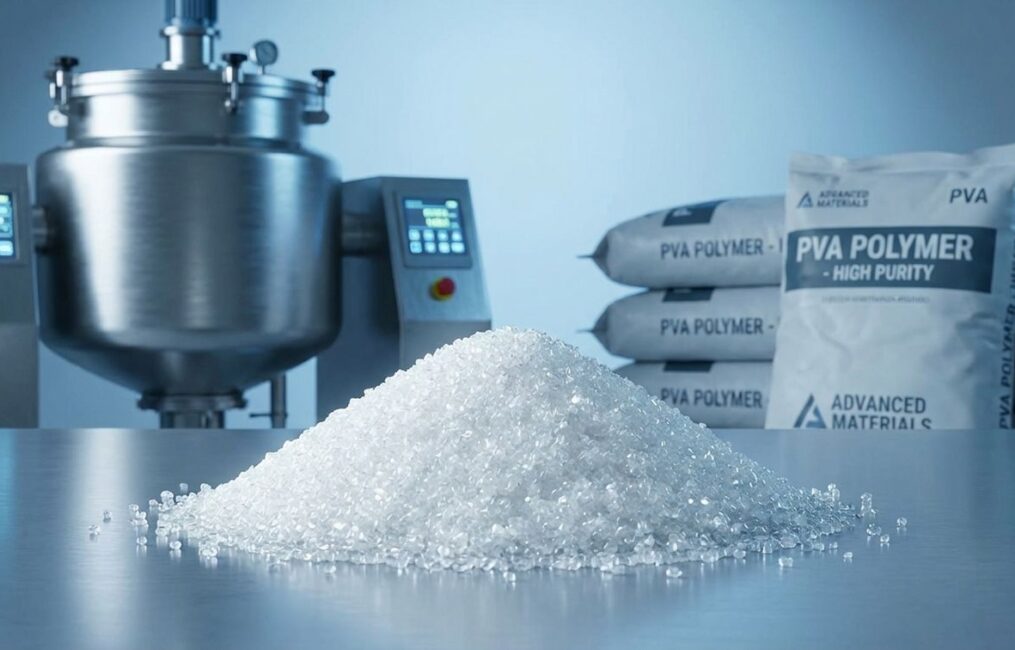
Alcool polyvinylique (PVA) Le PVA figure parmi les polymères hydrosolubles les plus polyvalents du marché mondial des produits chimiques. Essentiel à des industries aussi diverses que la construction, la transformation du papier, le textile et les adhésifs, le PVA est apprécié pour ses propriétés filmogènes exceptionnelles, sa haute résistance à la traction et sa résistance aux huiles et aux graisses. Toutefois, son efficacité dans les applications finales – que ce soit comme liant dans les revêtements ou comme stabilisant dans la polymérisation en émulsion – dépend entièrement du choix approprié de sa qualité et de la précision du procédé de solubilisation.
À rawchemicalmart.com, Nous fournissons de l'alcool polyvinylique de qualité supérieure, ainsi qu'une vaste gamme de produits RDP/VAE, de dioxyde de titane et de produits chimiques pour le traitement de l'eau. Ce guide technique explore les paramètres essentiels du choix du PVA, sa préparation en laboratoire et la transition vers un mélange industriel à haut rendement.
Distinguer le PVA du PVAc : chimie et spécifications
Une erreur fréquente lors de l'achat et de l'utilisation de ces produits est la confusion entre l'alcool polyvinylique (PVA) et l'acétate de polyvinyle (PVAc). Bien qu'ils soient chimiquement apparentés, leurs propriétés et leurs applications diffèrent considérablement.
Le PVA est fabriqué par hydrolyse (ou alcoolyse) de l'acétate de polyvinyle. Ce procédé consiste à raffiner le PVA en remplaçant les groupes acétate par des groupes hydroxyle grâce à un catalyseur tel que l'hydroxyde de sodium. Le degré d'avancement de cette réaction détermine la qualité du produit final.
Vous cherchez à vous approvisionner en PVA de qualité industrielle ?
En tant que fournisseur mondial de premier plan, Raw Chemical Mart propose une gamme complète d'alcool polyvinylique (PVA) adaptée à la fabrication à grand volume, des textiles aux adhésifs de pointe.
Paramètres techniques clés : hydrolyse et viscosité
Lors de l'approvisionnement en PVA auprès de rawchemicalmart.com, deux spécifications principales déterminent les performances :
- Degré d'hydrolyse : Cela fait référence au pourcentage de groupes acétate remplacés par des groupes hydroxyle.
- Entièrement hydrolysé (97,5% – 99,5% mol) : Offre une résistance à la traction et une imperméabilité supérieures. Couramment rencontré pour des masses moléculaires d'environ 22 000.
- Partiellement hydrolysé (87% – 89% mol) : Généralement plus soluble dans l'eau à basse température et offrant une meilleure adhérence aux surfaces hydrophobes.
- Viscosité (masse moléculaire) : La longueur de la chaîne polymère (n dans la formule développée) détermine la viscosité. Plus la masse moléculaire est élevée, plus la viscosité de la solution est importante, ce qui influe considérablement sur la méthode d'application et les exigences de mélange.
| Fonctionnalité | Alcool polyvinylique (PVA) | Acétate de polyvinyle (PVAc) |
|---|---|---|
| État chimique | Vendu sous forme de poudre granuleuse transparente/blanche. | Souvent vendue sous forme d'émulsion liquide. |
| Stabilité du pH | pH neutre ; stable dans le temps. | Dégage des vapeurs d'acide acétique ; le pH peut chuter à <5 en 6 mois. |
| Durée de conservation | Longue durée de conservation sous forme de poudre sèche. | Durée de conservation plus courte en raison de l'instabilité du liquide. |
| Réversibilité | Réversible à l'eau ; souvent ajouté à l'EVA pour améliorer sa réversibilité. | Devient insoluble avec le temps. |
Échelle de laboratoire : La méthode “ Cook ” standard
Pour les essais de R&D ou les applications en petites séries (comme les adhésifs d'archivage ou les formulations de revêtements spécifiques), la préparation d'une solution de PVA exige une gestion thermique rigoureuse. Contrairement aux sels simples, les granules de PVA ne se dissolvent pas instantanément dans l'eau froide ; leur structure cristalline nécessite de l'énergie pour se défaire.
Protocole de solution 20%
Une solution standard à haute teneur en solides (20%) permet d'obtenir un adhésif ou un liant polyvalent. Le protocole suivant garantit une dissolution complète sans dégradation du polymère :
- Rapport: 200 grammes de poudre de PVA pour 1000 millilitres d'eau purifiée.
- Processus:
- Mettez les granules de PVA dans un récipient et complétez avec de l'eau jusqu'au repère de 1000 ml.
- Chauffer. La solution doit être portée à une température proche de l'ébullition puis mijotée.
- Durée: Laisser mijoter pendant au moins 30 minutes (ou 5 minutes au micro-ondes pour de très petites quantités).
- Observation: La solution est prête lorsqu'elle devient un liquide clair, incolore et légèrement visqueux. Si des granules persistent, poursuivez le chauffage.
Note d'application : Lors du refroidissement, une solution de PVA 20% totalement hydrolysée peut former une gelée rigide. Ce phénomène est normal. Elle peut être appliquée sous forme de gel ou, par agitation mécanique (mélange), ramenée à l'état liquide épais. Cette thixotropie est idéale pour les applications nécessitant un glissement initial suivi d'une adhérence rapide, comme la fabrication de boîtes ou le pelliculage de papier.
Passage à l'échelle industrielle : Technologies de mélange à cisaillement élevé
Bien que la méthode de “ cuisson ” convienne au laboratoire, elle s'avère inefficace pour la production industrielle à grande échelle. Les agitateurs traditionnels en cuve peinent souvent à humidifier correctement la poudre, ce qui entraîne la formation d'agglomérats hydratés à cœur sec (appelés “ yeux de poisson ”) ou nécessite des temps de chauffage excessifs.
Pour optimiser l'efficacité de la production, les fabricants industriels utilisent Mélange à cisaillement élevé. Cette technologie accélère la solubilisation et garantit la constance des lots.
Le processus de dispersion en 3 étapes
Les mélangeurs modernes à cisaillement élevé (tels que les systèmes en ligne ou rotor/stator) révolutionnent le processus de solubilisation du PVA :
Étape 1 : Incorporation rapide
Le récipient est rempli d'eau chaude. Dès le démarrage du mélangeur, la rotation à grande vitesse du rotor crée un puissant vide. La poudre de PVA est ajoutée et immédiatement aspirée dans la tête de travail. Ceci empêche la poudre de flotter à la surface (effet de rafting) et assure un mouillage instantané.
Étape 2 : Désintégration par cisaillement élevé
La force centrifuge propulse le matériau mouillé vers la périphérie de la tête de travail. À cet endroit, le mélange subit un cisaillement hydraulique intense dans l'espace précis entre le rotor et le stator. Les agglomérats ou impuretés sont broyés mécaniquement avant d'être expulsés par les orifices du stator.
Étape 3 : Circulation et solubilisation
Le matériau est réinjecté dans le corps principal du mélange, créant ainsi un mouvement de circulation. Simultanément, du matériau frais est aspiré dans la tête de travail. Ce cycle se répète des centaines de fois, décomposant progressivement le polymère et exposant une surface maximale à l'eau.
Avantages du mélange à cisaillement élevé pour le PVA
- Élimination des agglomérats : La dispersion rapide empêche la formation de grumeaux, un problème courant avec l'agitation conventionnelle.
- Temps de traitement réduit : En dispersant le PVA dans de l'eau chaude avec un fort cisaillement, le taux de solubilisation est considérablement augmenté.
- Cohérence: La poudre est totalement dispersée avant que la viscosité ne commence à augmenter, assurant ainsi une distribution moléculaire uniforme dans tout le lot.
- Efficacité énergétique : La réduction des temps de chauffage et de mélange se traduit par une baisse des coûts opérationnels par tonne métrique.
Recommandations en matière de stockage et de manutention
Bien que la poudre de PVA soit chimiquement stable, la solution préparée nécessite des protocoles de manipulation spécifiques pour maintenir sa qualité.
Conseil en matière d'approvisionnement et de sécurité :
Stabilité biologique : Les solutions de PVA sont sensibles au développement de moisissures si elles ne sont pas protégées. Pour les lots industriels destinés à un stockage de longue durée, l'ajout d'un biocide est nécessaire. Il est également possible de préparer des solutions à la demande à partir de poudre sèche, qui se conserve indéfiniment dans des conditions de stockage appropriées.
Neutralité du pH : Contrairement au PVAc, qui se dégrade en composants acides, les solutions de PVA conservent généralement le pH de l'eau utilisée pour leur préparation. Cette neutralité les rend compatibles avec les pigments sensibles à l'acidité (comme l'oxyde de fer) ou les additifs alcalins (comme le TCCA dans les solutions de traitement de l'eau).
Conclusion : Votre partenaire mondial pour les produits chimiques industriels
Que vous ayez besoin de PVA à haute viscosité pour les adhésifs de construction ou de qualités à faible poids moléculaire pour l'encollage textile, la qualité de la matière première détermine le succès de votre formulation. rawchemicalmart.com, Nous veillons à ce que chaque lot d'alcool polyvinylique réponde aux normes internationales les plus rigoureuses en matière d'hydrolyse, de pureté et de distribution granulométrique.
Nos capacités en matière de chaîne d'approvisionnement s'étendent au-delà du PVA et couvrent toute une gamme de produits industriels essentiels, notamment : dioxyde de titane pour les revêtements, gomme xanthane pour la stabilisation, et TCCA/SDIC Pour le traitement de l'eau. En combinant expertise technique et logistique fiable, nous optimisons le fonctionnement de vos lignes de production pour une efficacité accrue, des délais plus courts et des coûts réduits.