Fabricación de celulosa polianiónica (PAC): desde el abastecimiento de celulosa hasta los aditivos de perforación de alta viscosidad.
 José•
José•
Domine el proceso de fabricación de PAC. Aprenda sobre eterificación, tratamiento alcalino y optimización de alta viscosidad para fluidos de perforación. Solicite hoy mismo un presupuesto para grandes volúmenes.
Descripción técnica general: La evolución de la celulosa polianiónica (PAC)
La celulosa polianiónica (PAC) es un polímero de alta calidad, soluble en agua y derivado químicamente modificado de la celulosa natural. En la jerarquía de los productos químicos para yacimientos petrolíferos, la PAC se erige como una alternativa superior a la carboximetilcelulosa (CMC), ya que ofrece mayor tolerancia a la sal, estabilidad térmica y control de la pérdida de fluidos.
El proceso de fabricación consiste en una sofisticada secuencia de sustitución nucleofílica, donde la introducción de grupos carboxilo aniónicos en la cadena principal de la celulosa transforma una fibra natural insoluble en un aditivo macromolecular de alto rendimiento. Esta guía explora la síntesis industrial del PAC, centrándose en los parámetros críticos que determinan su grado: específicamente PAC-LV (baja viscosidad) y PAC-HV (alta viscosidad).
Especificaciones técnicas y propiedades químicas
Comprender la arquitectura molecular es fundamental para la I+D y la adquisición de materias primas. El PAC se define por su grado de sustitución (DS) y su grado de polimerización (DP).
| Propiedad | PAC-HV (Alta Viscosidad) | PAC-LV (Baja Viscosidad) |
|---|---|---|
| Función principal | Control de pérdida de fluido más viscosificación de alta eficiencia | Control de la pérdida de fluidos sin cambios reológicos significativos |
| Viscosidad aparente (VA) | ≥ 50 mPa·s | ≤ 40 mPa·s |
| Grado de Sustitución (GS) | ≥ 0,90 | ≥ 0,90 |
| Punto de fluencia (YP) | ≥ 19,2 (con una dosis de 11,4 g/L) | ≤ 1,5 (con una dosis de 11,4 g/L) |
| Pureza (grado purificado) | ≥ 95,0% | ≥ 95,0% |
| Contenido de humedad | ≤ 10,0% | ≤ 10,0% |
| Almidón | Negativo | Negativo |
| Cumplimiento de las normas | API 13A, GB/T 5005, ISO 13500 | API 13A, GB/T 5005, ISO 13500 |
El flujo de trabajo de fabricación de PAC: un análisis técnico paso a paso
1. Abastecimiento y pretratamiento de la celulosa refinada
El proceso comienza con celulosa de alta pureza, generalmente obtenida de fibras de algodón o pulpa de madera. Para obtener PAC de alta viscosidad, se requiere un alto grado de polimerización (DP) (a menudo ≥2600). La celulosa se tritura para aumentar su superficie, lo que garantiza una cinética de reacción uniforme en las etapas posteriores.
2. Alcalinización (Tratamiento alcalino)
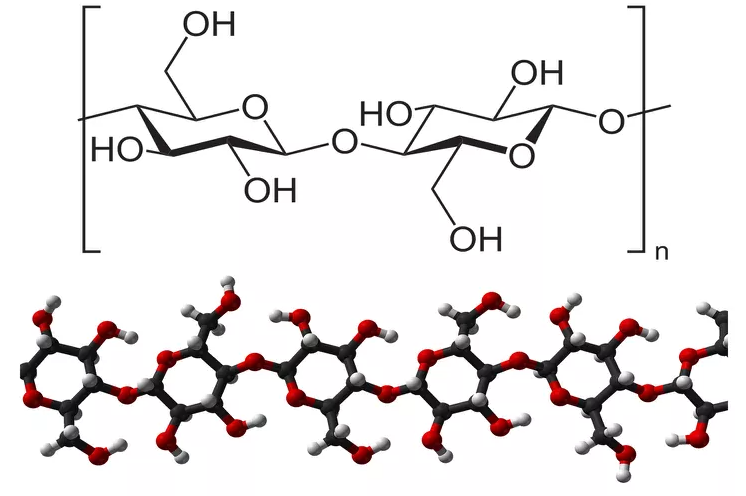
En una amasadora a presión, la celulosa reacciona con una solución concentrada de hidróxido de sodio (NaOH), a menudo en presencia de un disolvente a base de alcohol (como etanol o isopropanol) que actúa como dispersante.
- La reacción: Cell-OH + NaOH → Cell-ONa + H₂O
- Control crítico: La temperatura debe mantenerse entre 8 °C y 15 °C. El calor excesivo durante la alcalinización provoca la ruptura de las cadenas moleculares, lo que reduce irreversiblemente la viscosidad del producto final.
⚙️ Sustitución vs. Rendimiento
La calidad depende del proceso de fabricación, pero ¿cómo se compara el PAC con el CMC en perforaciones reales? Descubra las diferencias técnicas.
PAC vs. CMC: La guía definitiva →3. Eterificación: La síntesis central
La “celulosa alcalina” se hace reaccionar posteriormente con un agente eterificante, principalmente ácido monocloroacético (MCA) o monocloroacetato de sodio (SMCA).
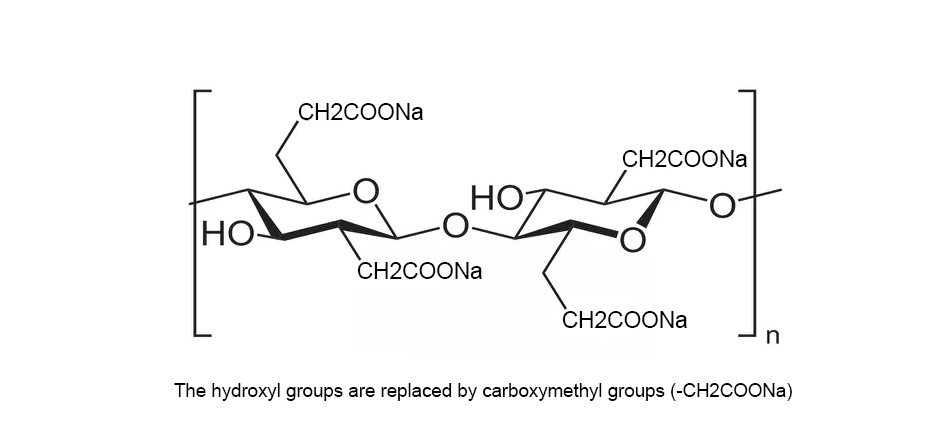
- El mecanismo: Se trata de una sustitución nucleofílica en la que los grupos hidroxilo se reemplazan por grupos carboximetilo (-CH2COONa).
- Mejoramiento: Para lograr una alta tolerancia a la sal, se debe maximizar el grado de sustitución (GS). La fabricación avanzada utiliza un método de "adición dividida" para el NaOH con el fin de controlar la naturaleza exotérmica de la reacción.
4. Acidificación, lavado y neutralización
Una vez alcanzado el grado de sustitución deseado, el PAC crudo se neutraliza con ácidos minerales (como el HCl) para lograr un pH estable (normalmente entre 7,0 y 8,0). El producto se lava con mezclas de alcohol y agua para eliminar subproductos como el cloruro de sodio, garantizando así una alta pureza química.
5. Secado, granulación y molienda
La suspensión de PAC purificada se seca mediante secado por pulverización o secado rotatorio al vacío.
- PAC-LV A menudo se procesa para asegurar una rápida solubilidad sin aumentar la viscosidad plástica (PV) del fluido base.
- PAC-HV Se procesa para mantener la integridad de la cadena larga y así obtener el máximo rendimiento.
Aplicaciones industriales y optimización del rendimiento
Petróleo y gas: Sistemas de fluidos de perforación
- Control de filtración: El PAC forma una torta de filtración delgada, resistente y de baja permeabilidad en la pared del pozo.
- Tolerancia a la sal: El PAC de alta susceptibilidad sigue siendo eficaz en salmuera saturada y en condiciones de alto contenido de calcio.
Construcción y minería
- Inhibición de esquisto: Recubre las partículas de arcilla para evitar que se hinchen y se dispersen.
- Lubricidad: Reducción del par y la fricción en la perforación direccional horizontal (HDD).
Cómo superar los problemas industriales más comunes
Problema 1: Pérdida de viscosidad en pozos de alta temperatura
- Solución: Usar PAC modificado o térmicamente estable. Aumentar el grado de sustitución (DS ≥0,90) y utilizar aditivos especializados mejora la estabilidad térmica hasta 150°C.
Problema 2: Mala disolución (ojos de pez)
- Solución: Utilizar PAC granulado o con tratamiento superficial. La velocidad de hidratación controlada permite que las partículas se dispersen completamente antes del espesamiento, evitando eficazmente la formación de "ojos de pez" en la mezcla de baja cizalladura.
Conclusión: Selección del grado adecuado de PAC
La eficiencia de una operación de perforación depende de la calidad del PAC utilizado. Si bien el PAC-LV es esencial para mantener la densidad del fluido sin espesarlo, el PAC-HV es la herramienta principal para limpiar el pozo. Al controlar la temperatura de alcalinización y la relación de eterificación, los fabricantes pueden adaptar el PAC para que resista los entornos más exigentes del fondo del pozo.