What is Yellow Iron Oxide? Properties, Uses & Grades (2026 Guide)
 Joe•
Joe•
Comprehensive guide to Yellow Iron Oxide (CAS 51274-00-1). Discover its chemical properties, manufacturing process, industrial powder grades, and applications in coatings and construction.
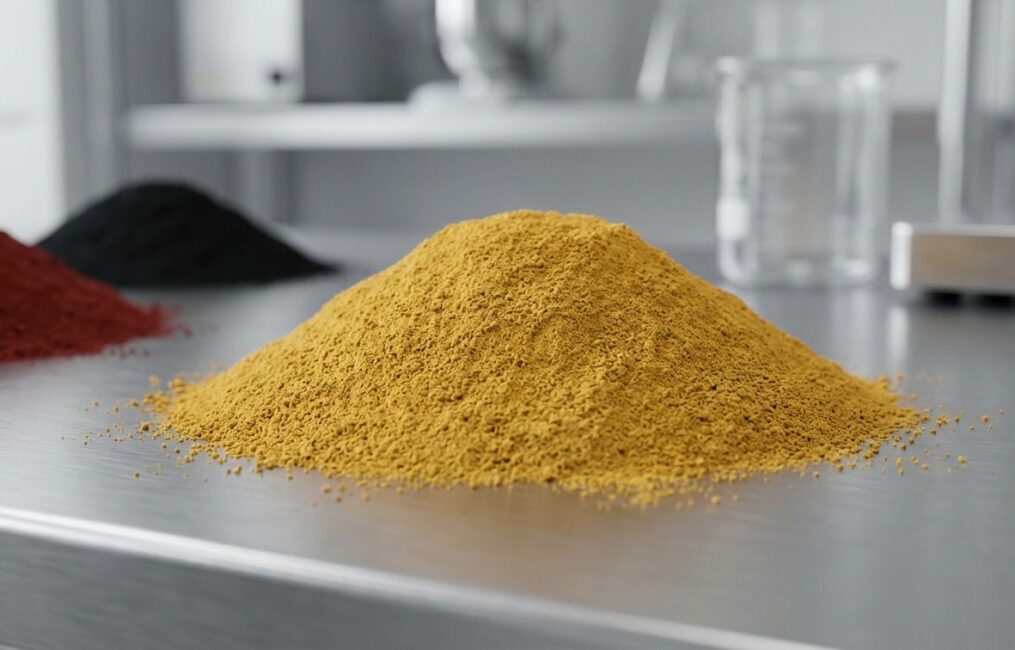
Yellow Iron Oxide (Ferric Oxide Hydrate) is one of the most versatile and widely used inorganic pigments in the world. Known for its brilliant color, superior weatherability, and chemical stability, it plays a critical role in industries ranging from construction and coatings to plastics and rubber.
Whether you are a chemical engineer looking for technical specifications or a procurement officer sourcing raw materials, this guide covers everything you need to know about Yellow Iron Oxide—from its chemical structure to its industrial applications.
1. What is Yellow Iron Oxide? (Definition & Chemistry)
Chemically, Yellow Iron Oxide is a hydrated ferric oxide with the formula Fe2O3·H2O (sometimes written as FeOOH). In the pigment industry, it is widely referred to as Pigment Yellow 42 (PY42).
Unlike natural ochres, the synthetic Yellow Iron Oxide used in modern industry is manufactured to have high purity, uniform particle size, and consistent color strength.
Key Chemical Identity
- Chemical Name: Iron (III) Oxide Monohydrate
- Common Name: Iron Oxide Yellow
- Número CAS: 51274-00-1
- EINECS Number: 257-098-5
- Molecular Formula: Fe2O3·H2O / α-FeOOH
2. Physical and Chemical Properties
Why is this pigment so popular? It comes down to its stability. Yellow Iron Oxide is non-toxic, non-bleeding, and resistant to alkalis and mild acids. It is completely insoluble in water and organic solvents.
Below is a typical technical specification sheet for standard industrial-grade Yellow Iron Oxide:
| Propriedade | Typical Value |
| Aparência | Fine Yellow Powder |
| Fe2O3 Content | ≥ 86% |
| Absorção de óleo | 25-35 ml/100g |
| Residue on 325 Mesh | ≤ 0,3% |
| Moisture (Volatile at 105°C) | ≤ 1,0% |
| Valor de pH | 3.5 – 7.0 |
| Resistência ao calor | Up to 180°C (356°F) |
| Resistência à luz | Grade 7-8 (Excellent) |
Note: Specific values may vary slightly depending on the manufacturer and the specific grade.
3. How is Yellow Iron Oxide Made?
While natural deposits exist, industrial demand is met through synthetic production to ensure quality consistency.
The most common manufacturing method is the Precipitation Process (often involving the Penniman-Zoph process). This involves the oxidation of iron salts and metallic iron in an acidic medium. By strictly controlling the reaction temperature, pH, and oxidation rate, manufacturers can adjust the particle size—which directly influences the shade of yellow (ranging from a pale lemon to a deep orange-yellow).
Learn More: For a detailed breakdown of the synthesis and chemical reactions, read our deep dive on How to Make Yellow Iron Oxide
4. Industrial Grades: Powder Specifications
Not all Yellow Iron Oxide is the same. Depending on the final application, you will need to choose the correct grade. This section replaces the need for a separate guide on “industrial powders” by breaking down the key categories here.
A. Paint & Coating Grade (Micronized)
- Characteristics: Ultra-fine particle size, high dispersibility, and high tinting strength.
- Why use it: It prevents flocculation (clumping) in liquid paints and provides a smooth, glossy finish.
- Mesh Size: Often passes through sieves much finer than 325 mesh.
B. Construction Grade (Standard)
- Characteristics: Cost-effective with strong tinting power and excellent alkali resistance.
- Why use it: It must withstand the highly alkaline environment of cement and concrete without fading.
- Aplicativo: Paving stones, roof tiles, and stucco.
C. Heat-Resistant Grade
- Characteristics: Specially treated (often encapsulated) to withstand higher temperatures.
- Limitation: Standard Yellow Iron Oxide begins to dehydrate and turn red (turning into Red Iron Oxide) at roughly 180°C.
- Why use it: Required for plastic masterbatches (PE, PP) processed at high temperatures.
5. Major Applications and Uses
Coatings and Paints
This is one of the largest markets for Yellow Iron Oxide. It is used in:
- Architectural Paints: Exterior and interior wall paints.
- Revestimentos Industriais: Anti-rust primers (due to its chemical inertness).
- Powder Coatings: Provides durable color for metal finishing.
Construction Materials
Because Iron Oxide is chemically inert and UV stable, it is the standard pigment for coloring concrete. It is widely used in:
- Interlocking bricks and pavers.
- Colored concrete floors.
- Roofing tiles.
- Artificial marble and terrazzo.
Plastics and Rubber
It is used as a colorant in plastic products, offering good opacity and light protection. It is commonly found in masterbatches for packaging materials, vinyl siding, and rubber flooring.
6. Safety, Handling, and Storage
Yellow Iron Oxide is generally considered safe and non-toxic. However, as with any fine industrial powder, proper handling is essential to avoid dust inhalation.
- PPE: Workers should use dust masks and safety glasses.
- Armazenar: Store in a cool, dry place away from moisture. Keep bags sealed when not in use.
- Prazo de validade: When stored correctly, it has an indefinite shelf life, though 2-3 years is the standard recommendation for optimal dispersion performance.
Safety First: For detailed toxicity data and handling protocols, please refer to our article on Yellow Iron Oxide Safety.
Conclusão
Yellow Iron Oxide is an indispensable pigment for modern industry, balancing performance with cost-efficiency. Whether you are formulating a new UV-resistant coating or manufacturing colored concrete pavers, understanding the properties and grades of this material is key to product success.
Looking for high-quality Yellow Iron Oxide? Contact us today for a quote or a sample of our industrial-grade pigments.