Understanding Polyanionic Cellulose (PAC-LV) COA in Drilling Fluids
 Joe•
Joe•
Optimize drilling fluid rheology with API-13A compliant Polyanionic Cellulose (PAC-LV). High salt tolerance & fluid loss control. View technical specs & buy now.
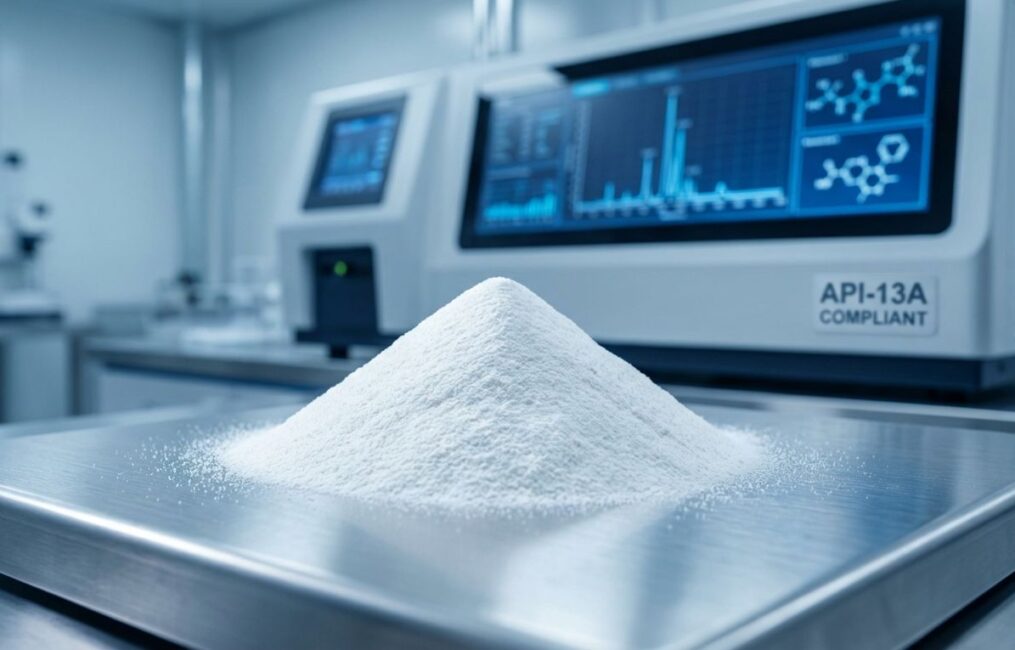
In the high-stakes environment of offshore and deep-well drilling, the chemical integrity of drilling fluids is the primary defense against geological failure. Polyanionic Cellulose (PAC), specifically the Low Viscosity (LV) grade, serves as a critical rheology modifier and filtration control agent.
Compliance with the API-13A (American Petroleum Institute) standard is not merely a regulatory hurdle; it is a benchmark of molecular engineering that ensures borehole stability under extreme salinity and thermal stress.
Technical Specification Analysis: The API-13A Benchmark
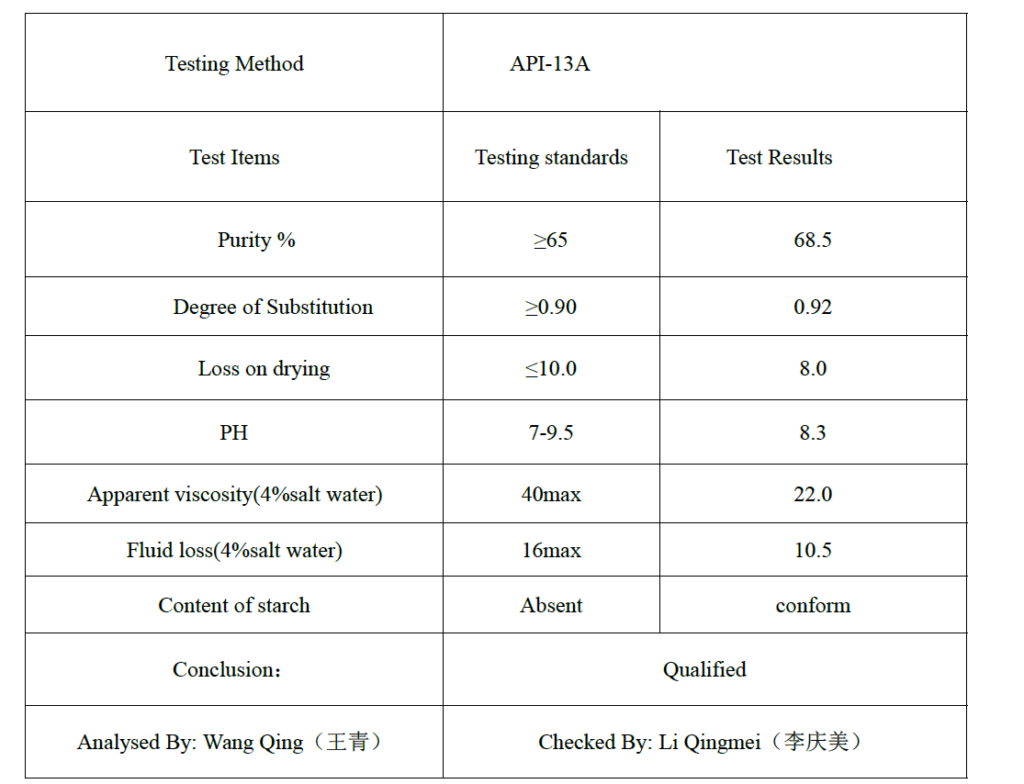
The following table synthesizes the core quality indicators (CQIs) based on standard API-13A requirements and typical high-performance laboratory results.
| Item de teste | API-13A Standard | Test Result | Industrial Significance |
|---|---|---|---|
| Purity (%) | ≥65.0 | 68.5 | Concentration of active polymer; directly impacts the cost-efficiency of bulk procurement. |
| Degree of Substitution (D.S.) | ≥0.90 | 0.92 | Higher D.S. ensures superior salt tolerance and molecular stability in harsh drilling fluids. |
| Perda na Secagem (%) | ≤10.0 | 8 | Controls moisture content to prevent product caking and microbial degradation during transit. |
| Valor de pH | 7.0 – 9.5 | 8.3 | Maintains a non-corrosive environment for drilling tools and optimizes polymer longevity. |
| Apparent Viscosity (4% Salt) | 40 max | 22 | Confirms the "Low Viscosity" (LV) grade, ensuring minimal resistance to mud flow. |
| Fluid Loss (4% Salt) | 16 max | 10.5 | Crucial "shielding" factor that prevents water migration into geological strata. |
| Content of Starch | Ausente | Conform | Guarantees resistance to high-temperature thinning and fermentation. |
The Chemistry of Performance: Deep Dive into Indicators
A. Degree of Substitution (D.S.) & Salt Tolerance
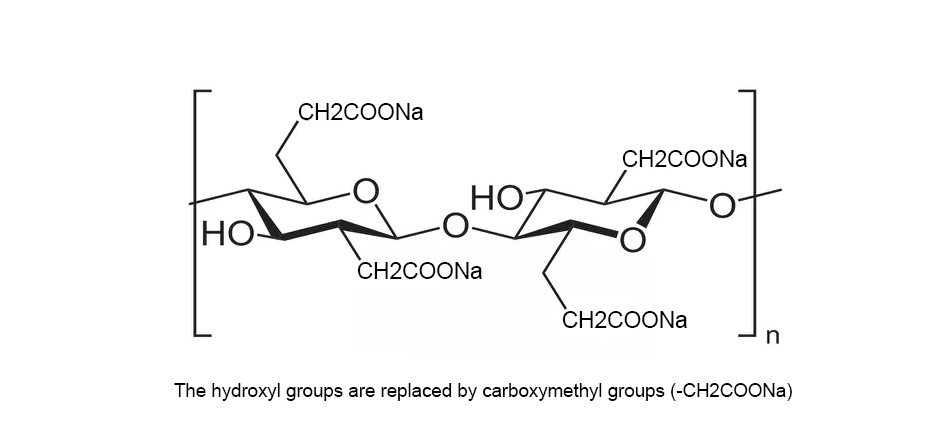
The D.S. represents the average number of hydroxyl groups on each anhydroglucose unit that have been replaced by carboxymethyl groups. For PAC-LV, a D.S. ≥ 0.90 is vital.
- High D.S. (0.92): Provides superior solubility in saturated brine. The negatively charged carboxyl groups (-CH2COO-) create electrostatic repulsion, keeping the polymer chain extended even in high-electrolyte environments.
- Low D.S. (<0.70): Leads to “coiling” of the molecule in salt water, causing the polymer to precipitate and the wellbore to lose its protective seal.
B. Fluid Loss: The “Tight Filter Cake” Mechanism
Fluid loss (measured at 10.5 mL in the sample) is the most critical field-performance metric. PAC-LV functions by adsorbing onto clay particles to form a thin, tough, and low-permeability filter cake on the borehole wall.
- Mechanism: In a 4% NaCl solution, the PAC-LV molecules must remain dispersed enough to bridge the microscopic pores of the formation. A result of 10.5 mL (against a limit of 16) indicates a highly efficient “sealing” capability, which protects the oil-bearing zone from water damage.
C. Apparent Viscosity: Why “Low” is Often Better
In deep-well drilling, increasing the viscosity of the entire mud system can lead to excessive pump pressure and “lost circulation.”
- PAC-LV (Low Viscosity): Engineered to provide maximum filtration control with minimal impact on the mud’s thickness. This allows for faster drilling speeds (ROP) while maintaining the structural integrity of the wellbore.
D.Loss on Drying (Moisture Content):
While standard limits are ≤10\%, our typical result of 8.0% ensures the polymer stays free-flowing without clumping (fish eyes) during mixing. Lower moisture also means you are paying for active polymer, not water weight.
E. pH Value (8.3):
A slightly alkaline pH is critical for preventing the corrosion of drilling strings. It also optimizes the hydration rate of the PAC-LV, ensuring it reaches peak performance quickly after being added to the mud system.
F. Purity & Processing Cost:
Our PAC-LV purity ranges from 65% to 99%. To achieve higher purity, the crude slurry undergoes multiple ethanol-water washing cycles to remove byproduct salts. This direct correlation means that while 99% purity offers maximum potency, the increased washing cycles result in a higher production cost.
🔬 The Science Behind the Specs
Understand how API 13A parameters directly influence the filtration mechanism in drilling muds.
Explore Fluid Loss Science →Industrial Manufacturing & Quality Control
To achieve a “Qualified” API-13A status, the manufacturing process focuses on two critical stages:
- Alkalization & Etherification: Precision control of the NaOH to cellulose ratio ensures the D.S. stays above 0.90. Any uneven reaction leads to “gel specks” that fail the starch-free and fluid-loss tests.
- The Ethanol Wash (Purity Control): Higher purity (reaching 68.5% or higher) is achieved through multiple stages of high-concentration ethanol washing. This removes byproduct salts (Sodium Chloride and Sodium Glycolate), ensuring the final product is highly concentrated and potent.
Operational Impact: Cost vs. Performance
Using a “Qualified” API-13A PAC-LV reduces the Total Cost of Ownership (TCO) for drilling projects:
- Lower Dosage: High-purity PAC requires less material to achieve the same fluid-loss targets.
- Enhanced Equipment Life: A stable pH (8.3) and low starch content prevent the corrosion of drill strings and the souring of mud systems.
- Borehole Stability: Superior filter cakes prevent “differential sticking,” a common cause of multi-million dollar drilling delays.
Frequently Asked Questions (FAQ)
Q: Why is “Starch Absent” a mandatory requirement for API-13A?
A: API-13A standards strictly mandate the absence of starch because it is highly susceptible to bacterial fermentation and thermal degradation at temperatures exceeding 90°C. In high-stakes drilling environments, any residual starch can lead to a sudden collapse of the mud’s rheological properties and filtration control. A “Conform” result in our COA ensures the PAC-LV remains chemically stable and biocide-resistant in high-temperature, high-pressure (HTHP) conditions.
Q: Can PAC-LV be used in freshwater muds?
A: Yes, while it is optimized for salt water, PAC-LV provides excellent filtration control in freshwater systems without significantly increasing the mud’s yield point.
Q: How does “Loss on Drying” affect shelf life?
A: A moisture content of 8.0% (within the <10% limit) ensures the powder remains free-flowing for up to 24 months if stored in a dry, ventilated warehouse using standard 25kg PE/PP packaging.