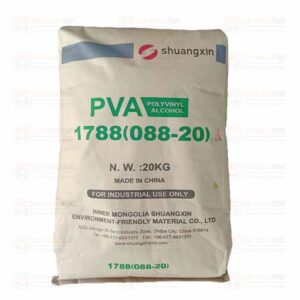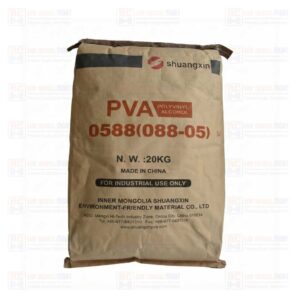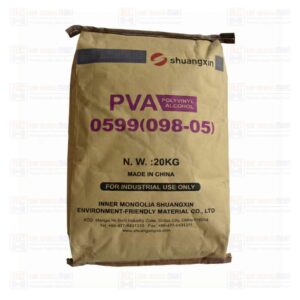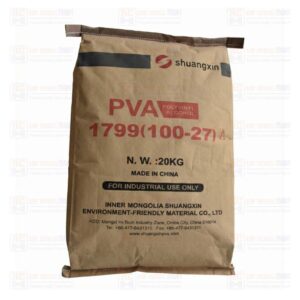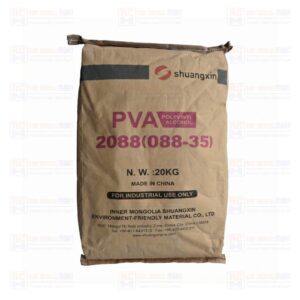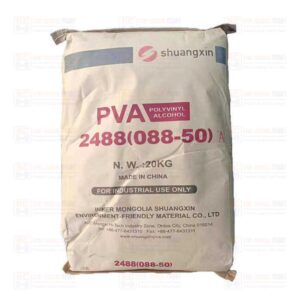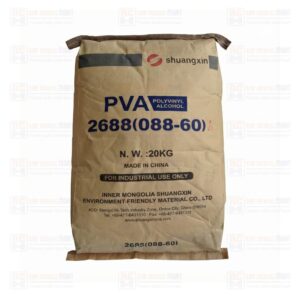


Breve introduzione:
Alcol polivinilico 26-99 (noto anche come PVA 2699 o 100-78) è un completamente idrolizzato, viscosità ultraelevata polimero di grado.
Con un intervallo di viscosità di 76,0 – 85,0 mPa.s e un grado di idrolisi di 98,00 – 100,00 mol%, Questa qualità offre la massima resistenza alla trazione e il massimo potere adesivo nella serie standard di PVA. È progettata per applicazioni industriali gravose in cui la massima adesione, resistenza all'acqua e resistenza del film sono fondamentali.
Specifiche:
| Articolo | Specificazione |
|---|---|
| Grado di alcolisi (mol%) | 98.00 - 100 |
| Viscosità (mPa·s) | 76.0 - 85.0 |
| Contenuto volatile (wt%, max) | 5 |
| Purezza (wt%, min) | 93.5 |
| Valore del pH | 5 ~ 7 |
| Contenuto di ceneri (peso %, massimo) | 0.5 |
Caratteristiche principali:
-
Solubilità: Altamente idrofilo ma richiede acqua calda (oltre 90°C) Grazie al suo elevato peso molecolare e alla completa idrolisi, si dissolve completamente. È insolubile nella maggior parte dei solventi organici.
-
Proprietà del film: Forma pellicole estremamente resistenti con eccellenti proprietà meccaniche e alta resistenza alla trazione. Fornisce una barriera superiore contro i gas ($H_2$, $N_2$, $O_2$).
-
Stabilità termica: Stabile fino a 130°C. Essendo completamente idrolizzato, inizia a sciogliersi intorno a 230 °C e si decompongono al di sopra dei 200 °C.
-
ResistenzaOffre una solida resistenza agli acidi deboli, alle basi deboli e agli oli.
-
ReattivitàEccellente capacità di reticolazione con acido borico o formaldeide (acetalizzazione) per creare adesivi resistenti all'acqua.
Applicazioni:
Il PVA 26-99 è il legante preferito per applicazioni ad alta resistenza:
-
Industria edile: ampiamente utilizzato nella produzione di colle da costruzione (ad esempio, colla 107), rivestimenti per pareti interne/esterne e adesivi acetalizzati.
-
Industria della ceramica: Agisce come un legante temporaneo ad alta resistenza per legame ceramico e sfere di alluminio, che garantiscono un'eccellente resistenza allo stato grezzo prima della cottura.
-
Produzione di tubi di carta: Utilizzato nell'industria degli adesivi per accordi di carta e nuclei in cui sono richieste un'elevata adesività iniziale e una resistenza di adesione finale.
-
Stabilizzante per emulsioniUtilizzato come addensante e stabilizzante per emulsioni di acetato di vinile (PVAc) e urea-formaldeide (UF).
Imballaggio:
- Confezione: 25 kg per sacco (sacco di carta kraft con rivestimento in plastica).
Prodotto Magazzinaggio:
- MagazzinaggioConservare in un luogo fresco, asciutto e ben ventilato per evitare che il prodotto si agglomeri e assorba umidità.
Domande frequenti:
D: Qual è la differenza tra PVA 26-99 e PVA 26-88?
A: Entrambi sono gradi ad altissima viscosità (~60-80 mPa.s), ma differiscono in idrolisi:
-
PVA 26-99 (completamente idrolizzato)Migliore resistenza all'acqua, maggiore resistenza alla trazione e punto di fusione più elevato (~230 °C). Ideale per colle edili e ceramiche.
-
PVA 26-88 (parzialmente idrolizzato)Migliore solubilità, flessibilità e attività superficiale. Ideale per la polimerizzazione in sospensione del PVC.
D: Perché il PVA 26-99 viene utilizzato nella ceramica?
A: Nella produzione ceramica, il PVA 26-99 agisce come legante. La sua elevata viscosità conferisce un'eccezionale "resistenza allo stato grezzo" (resistenza del corpo ceramico non cotto), prevenendo rotture durante la manipolazione prima della cottura. Brucia completamente durante la cottura.
D: Quanto è difficile sciogliere il PVA 26-99?
A: A causa della sua altissima viscosità e della completa idrolisi, è il grado più difficile da sciogliere. È necessario utilizzare acqua calda (90°C-95°C) e agitare energicamente per un periodo più lungo rispetto ai gradi di viscosità inferiori come il 17-99 per garantire una soluzione omogenea.
Hai bisogno di PVA ad alta resistenza 26-99? Contattaci. Forniamo alcol polivinilico 2699 ad altissima viscosità per incollaggi industriali gravosi.
Technical Support for Industrial Chemicals
Need technical documents, pricing, or shipping information? Tell us the product grade, application, required quantity, and destination port for a prompt quotation.
Richiedi un preventivo