Fabrication de cellulose polyanionique (PAC) : de l’approvisionnement en cellulose aux additifs de forage à haute viscosité
 Joe•
Joe•
Maîtrisez le procédé de fabrication du PAC. Découvrez l'éthérification, le traitement alcalin et l'optimisation de la viscosité pour les fluides de forage. Demandez un devis dès aujourd'hui.
Aperçu technique : L'évolution de la cellulose polyanionique (PAC)
La cellulose polyanionique (PAC) est un polymère hydrosoluble de haute qualité, dérivé chimiquement modifié de la cellulose naturelle. Dans la hiérarchie des produits chimiques utilisés dans l'industrie pétrolière, la PAC représente une alternative supérieure à la carboxyméthylcellulose (CMC), offrant une meilleure tolérance au sel, une stabilité thermique accrue et une maîtrise des pertes de fluides.
Le procédé de fabrication repose sur une séquence complexe de substitutions nucléophiles, où l'introduction de groupements carboxyle anioniques sur le squelette cellulosique transforme une fibre naturelle insoluble en un additif macromoléculaire haute performance. Ce guide explore la synthèse industrielle du PAC, en mettant l'accent sur les paramètres critiques qui déterminent sa qualité, notamment le PAC-LV (faible viscosité) et le PAC-HV (haute viscosité).
Spécifications techniques et propriétés chimiques
La compréhension de l'architecture moléculaire est essentielle pour la R&D et l'approvisionnement. Le PAC est défini par son degré de substitution (DS) et son degré de polymérisation (DP).
| Propriété | PAC-HV (Haute viscosité) | PAC-LV (faible viscosité) |
|---|---|---|
| Fonction principale | Contrôle des pertes de fluide et viscosification à haute efficacité | Contrôle des pertes hydriques sans modification significative de la rhéologie. |
| Viscosité apparente (AV) | ≥ 50 mPa·s | ≤ 40 mPa·s |
| Degré de substitution (DS) | ≥ 0,90 | ≥ 0,90 |
| Seuil de rendement (YP) | ≥ 19,2 (à une dose de 11,4 g/L) | ≤ 1,5 (à une dose de 11,4 g/L) |
| Pureté (Qualité purifiée) | ≥ 95,0% | ≥ 95,0% |
| Teneur en humidité | ≤ 10,0% | ≤ 10,0% |
| Amidon | Négatif | Négatif |
| Conformité aux normes | API 13A, GB/T 5005, ISO 13500 | API 13A, GB/T 5005, ISO 13500 |
Flux de travail de fabrication PAC : une analyse technique étape par étape
1. Approvisionnement et prétraitement de la cellulose raffinée
Le procédé débute avec de la cellulose de haute pureté, généralement issue de linters de coton ou de pâte de bois. Pour obtenir un PAC à haute viscosité, un degré de polymérisation (DP) élevé est requis (souvent ≥ 2 600). La cellulose est broyée afin d’augmenter sa surface spécifique, garantissant ainsi une cinétique de réaction uniforme lors des étapes suivantes.
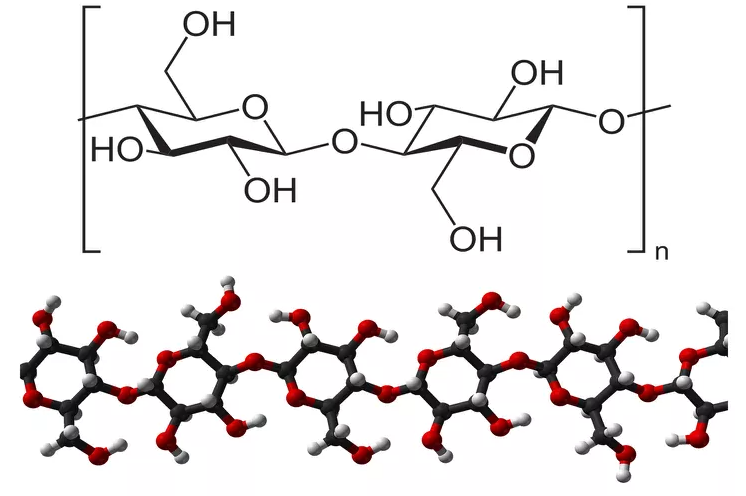
2. Alcalinisation (Traitement alcalin)
Dans un malaxeur sous pression, la cellulose réagit avec une solution concentrée d'hydroxyde de sodium (NaOH), souvent en présence d'un solvant à base d'alcool (comme l'éthanol ou l'isopropanol) pour agir comme dispersant.
- La réaction : Cell-OH + NaOH → Cell-ONa + H₂O
- Contrôle critique : La température doit être maintenue entre 8 °C et 15 °C. Une chaleur excessive pendant l'alcalinisation entraîne la rupture des chaînes moléculaires, ce qui diminue de façon irréversible la viscosité du produit final.
⚙️ Substitution vs. Performance
La qualité dépend de la fabrication, mais comment le PAC se compare-t-il au CMC en situation réelle de forage ? Découvrez les différences techniques.
PAC vs. CMC : Le guide ultime →3. Éthérification : La synthèse de base
La “ cellulose alcaline ” est ensuite mise en réaction avec un agent éthérifiant, principalement l’acide monochloroacétique (MCA) ou le monochloroacétate de sodium (SMCA).
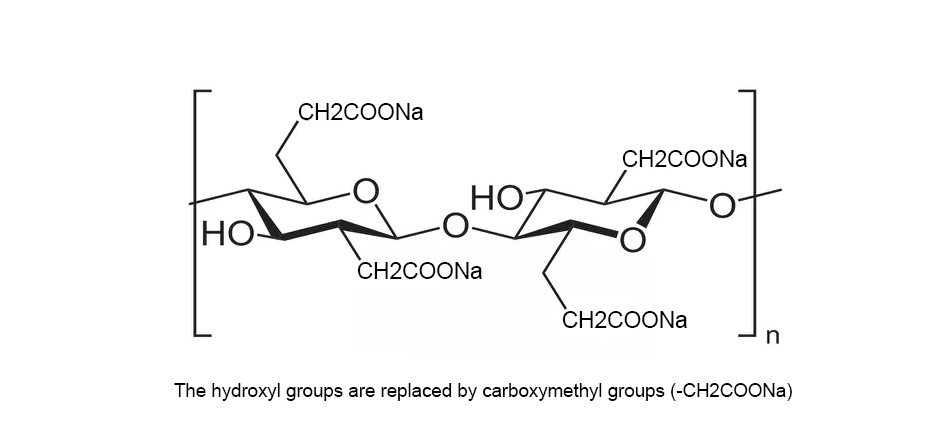
- Le mécanisme : Il s'agit d'une substitution nucléophile où les groupes hydroxyle sont remplacés par des groupes carboxyméthyle (-CH2COONa).
- Optimisation: Pour obtenir une tolérance élevée au sel, le degré de substitution (DS) doit être maximisé. Les procédés de fabrication avancés utilisent une méthode d'“ ajout fractionné ” de NaOH afin de contrôler le caractère exothermique de la réaction.
4. Acidification, lavage et neutralisation
Une fois le degré de substitution (DS) souhaité atteint, le PAC brut est neutralisé à l'aide d'acides minéraux (comme HCl) afin d'obtenir un pH stable (généralement entre 7,0 et 8,0). Le produit est ensuite lavé avec des mélanges hydroalcooliques pour éliminer les sous-produits tels que le chlorure de sodium, garantissant ainsi une pureté chimique élevée.
5. Séchage, granulation et broyage
La suspension de PAC purifiée est séchée par atomisation ou par séchage sous vide rotatif.
- PAC-LV est souvent traité pour assurer une solubilité rapide sans augmenter la viscosité plastique (PV) du fluide de base.
- PAC-HV est traité de manière à préserver l'intégrité de la chaîne longue pour un rendement maximal.
Applications industrielles et optimisation des performances
Pétrole et gaz : Systèmes de fluides de forage
- Contrôle de la filtration : Le PAC forme un gâteau de filtration mince, résistant et à faible perméabilité sur la paroi du puits.
- Tolérance au sel : Le PAC à haut degré de substitution (DS) reste efficace dans les saumures saturées et dans des conditions à forte concentration de calcium.
Construction et exploitation minière
- Inhibition des schistes bitumineux : Il enrobe les particules d'argile pour empêcher leur gonflement et leur dispersion.
- Lubricité: Réduction du couple et de la traînée dans le forage directionnel horizontal (HDD).
Surmonter les points faibles courants de l'industrie
Problème 1 : Perte de viscosité dans les puits à haute température
- Solution: Utiliser PAC thermiquement stable ou modifié. L'augmentation du degré de substitution (DS ≥ 0,90) et l'utilisation d'additifs spécialisés améliorent la stabilité thermique jusqu'à 150°C.
Problème n° 2 : Mauvaise dissolution (effet yeux de poisson)
- Solution: Utiliser PAC granulé ou traité en surface. Le taux d'hydratation contrôlé permet aux particules de se disperser complètement avant de s'épaissir, évitant ainsi efficacement la formation d'“ yeux de poisson ” lors d'un mélange à faible cisaillement.
Conclusion : Choisir le bon grade PAC
L'efficacité d'une opération de forage dépend de la qualité du PAC utilisé. Si le PAC-LV est essentiel pour maintenir la densité du fluide sans l'épaissir, le PAC-HV est l'outil principal pour le nettoyage du puits. En contrôlant la température d'alcalinisation et le taux d'éthérification, les fabricants peuvent adapter le PAC aux conditions environnementales les plus extrêmes en fond de puits.