The Ultimate Technical Guide to Xanthan Gum: Properties, Applications, and Global Market Insights
 Joe•
Joe•
Introduction: What is Xanthan Gum? Xanthan Gum is a high-molecular-weight microbial polysaccharide produced through a bio-engineering process involving the fermentation of carbohydrates—primarily corn starch and soybean powder—by the bacteria Xanthomonas campestris. As one of the world’s most commercially significant microbial polysaccharides, Xanthan Gum is a staple in the global hydrocolloid market. It is renowned for
Introduction: What is Xanthan Gum?
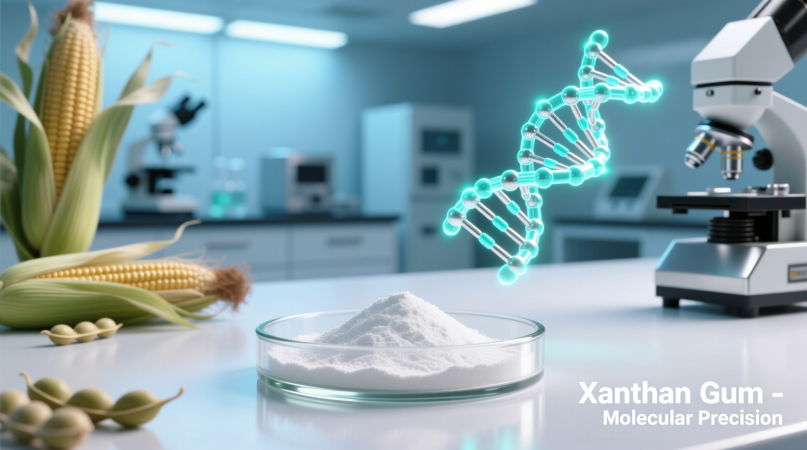
Xanthan Gum is a high-molecular-weight microbial polysaccharide produced through a bio-engineering process involving the fermentation of carbohydrates—primarily corn starch and soybean powder—by the bacteria Xanthomonas campestris.
As one of the world’s most commercially significant microbial polysaccharides, Xanthan Gum is a staple in the global hydrocolloid market. It is renowned for its versatility and safety. Internationally, it is recognized as a safe food additive by the FAO/WHO, and it has been approved for use in China since 1996 with no specific limit on the quantity added (GMP).
While it is most famous for its role in the food industry, its unique rheological properties make it an indispensable component in the petroleum (oil and gas), personal care, and general industrial sectors.
Global Market Overview: China’s Dominance
The global demand for Xanthan Gum is driven by increasing consumer awareness of food safety and nutrition, alongside a robust recovery in the oil and gas exploration sector.
- Global Capacity: The current global annual output exceeds 270,000 tons.
- China’s Role: China stands as the world’s largest production base for Xanthan Gum, controlling the global supply chain with an annual capacity of approximately 220,000 tons.
- Export Power: Benefiting from economies of scale and competitive pricing, Chinese manufacturers dominate the international landscape. Approximately 70% of Chinese production is exported, making the global market highly dependent on Chinese supply chains.
Technical Characteristics & Physicochemical Properties
Xanthan Gum is distinguished by its unique molecular structure, which grants it exceptional stability and rheological control.
1. Superior Water Solubility
Unlike many hydrocolloids that require heat, Xanthan Gum dissolves rapidly in both cold and hot water. This property eliminates complex processing steps, saving energy and time during manufacturing.
2. Extreme Thickening Efficiency
It functions as a highly efficient thickener. A remarkably low concentration (e.g., a 1% solution) creates significant viscosity—approximately 100 times that of gelatin—making it cost-effective.
3. Pseudoplasticity (Shear Thinning)
This is Xanthan Gum’s most critical functional trait.
- Static State: Under low shear or static conditions, it exhibits high viscosity, creating a strong network.
- Dynamic State: Under high shear (mixing, pumping, pouring), viscosity drops instantly.
- Recovery: Once shear stops, viscosity recovers immediately. This is vital for stabilizing suspensions and emulsions.
4. Suspension and Emulsification
Due to its yield stress value, it serves as an excellent suspending agent for insoluble solids and oil droplets, preventing sedimentation and phase separation.
5. Thermal Stability
Xanthan Gum is uniquely resilient to temperature fluctuations. Its viscosity remains virtually unchanged between 10°C and 80°C. Even at low concentrations, it maintains high viscosity across a broad temperature spectrum.
6. Enzymatic Resistance
The stable double-helix structure of Xanthan Gum provides strong resistance to oxidation and enzymatic degradation. It is generally immune to degradation by proteases, amylases, cellulases, and hemicellulases.
7. Salt and Electrolyte Tolerance
It is highly compatible with high concentrations of salts (potassium, sodium, magnesium, etc.). It maintains solubility and viscosity even in saturated salt solutions without precipitating or flocculating.
8. pH Stability
Xanthan Gum is stable across a wide pH range. Viscosity is unaffected between pH 5 and 10, with only minor variations observed at extreme acidity (pH < 4) or alkalinity (pH > 11).
Applications in the Food Industry
Food-grade Xanthan Gum is used in dozens of product categories to improve texture, shelf-life, and sensory experience.
Beverages
- Function: Stabilizes pulps and prevents particle settling.
- Benefit: Prevents stratification (layering) during storage, improves mouthfeel, and ensures consistent flavor distribution.
Bakery & Baked Goods
- Function: Interacts with gluten proteins and starch to form a complex spatial network.
- Benefit: Significantly improves water retention, dough strength, and elasticity. It results in softer baked goods with an extended shelf life.
Sauces, Dressings, and Salads
- Function: Acts as an emulsifier and thickener.
- Benefit: Prevents oil-water separation, assists in flow control (pourability), and ensures the sauce clings to food without being runny (“water leakage”).
Dairy Products
- Function: Lowers surface tension at the oil-water interface.
- Benefit: Prevents whey separation (syneresis), stabilizes proteins, and prevents precipitation in neutral pH dairy drinks.
Frozen Foods (Ice Cream)
- Function: Shear-thinning allows for easy processing but stabilizes the mix during freezing.
- Benefit: Inhibits the migration of water molecules and checks the growth of large ice crystals between -18°C and 100°C. This results in a creamy, smooth texture with excellent meltdown resistance and shape retention.
Meat Products
- Function: Penetrates muscle tissue as a hydrophilic colloid.
- Benefit: Increases water-holding capacity (WHC), improving the tenderness, yield, and texture of processed meats (hams, sausages).
Noodles and Dough Products
- Function: Enhances the gluten network.
- Benefit: Increases dough stability and elasticity, reducing breakage during production and cooking.
Industrial & Commercial Applications
Beyond food, Xanthan Gum’s chemical resilience makes it a top choice for various industrial processes.
Cosmetics & Personal Care
Acts as a specialized surface-active agent due to its hydrophilic groups.
- Uses: Toothpaste, shampoos, hair gels, and hair dyes.
- Benefits: Provides thickening, suspension of beads/active ingredients, smooth lubrication, and binding.
Paints & Coatings
- Benefit: The pseudoplastic nature provides an anti-sagging effect. Paint flows smoothly under the brush (high shear) but adheres strictly to vertical surfaces without dripping once applied (low shear).
Firefighting Applications
- Innovation: Used to create gel-type anti-solvent foam extinguishing agents. Its thermal resistance and thickening power represent a significant breakthrough in fire suppression technology.
Textile Printing & Dyeing
- Uses: Paste thickener, sizing agent, and dispersant.
- Benefits: Ensures sharp definition in printing, better color adherence, and uniform pigment dispersion.
Ceramics
- Benefits: Acts as a binder that increases the density and green strength of ceramic bodies. It improves waterproofing and allows for more compact porcelain structures.
Pesticides & Agriculture
- Uses: Flowable concentrates and emulsions.
- Benefits: Ensures homogeneity of toxic elements and effective suspension of solids in liquid fertilizers and herbicides.
The Petroleum Sector: Drilling & Exploration
Industrial-grade Xanthan Gum is critical in the oil and gas sector, specifically for drilling fluids, completion fluids, and Enhanced Oil Recovery (EOR).
Primary Functions in Drilling Muds:
- Rheology Control: Due to its extreme pseudoplasticity, the fluid becomes thin at the high-speed drill bit (reducing friction and saving power) but immediately thickens in the annulus (the space between the drill pipe and the wall) to carry cuttings to the surface.
- Hole Cleaning: Its high low-shear-rate viscosity (LSRV) ensures excellent suspension of drill cuttings when circulation stops, preventing solids from settling and causing pipe sticking.
- Stability: Resistant to high temperatures, high pressure, and saline environments (including seawater drilling).
- Structure Protection: Prevents the collapse of borehole walls.
Xanthan Gum offers low friction resistance, high fracture-making efficiency, and ease of rapid mixing on-site, making it a cost-effective solution for modern oil extraction.
Conclusión
Xanthan Gum represents the intersection of biotechnology and industrial utility. Whether it is ensuring the smooth texture of ice cream or facilitating the extraction of oil from deep-sea wells, its unique physical and chemical properties make it irreplaceable.
With China leading the world in production capacity and export volume, the market for both food-grade and industrial-grade Xanthan Gum is poised for continued growth, supported by its versatility, safety profile, and cost-effectiveness.